THE STORY
A broken play became one of Derek Jeter’s defining moments.
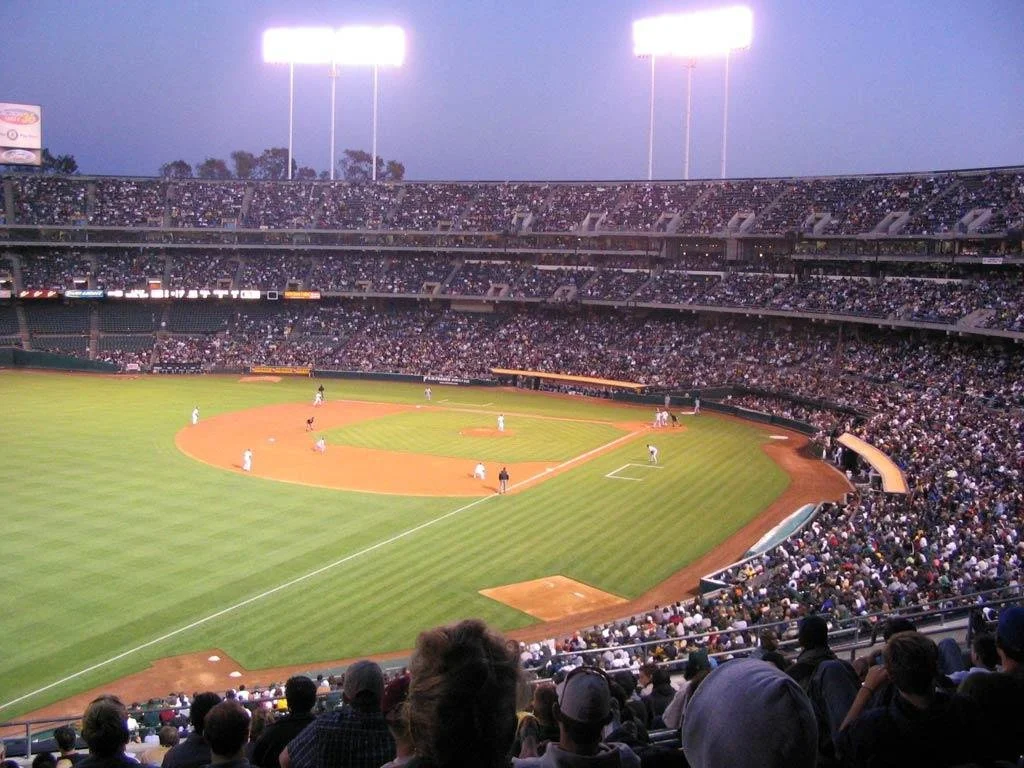
October 13, 2001 · Network Associates Coliseum · Oakland, California
The Yankees entered Game 3 of the American League Division Series in unfamiliar territory.
After losing the first two games of the best-of-five series at Yankee Stadium, New York traveled to Oakland one loss away from elimination. The Athletics had won 102 games during the regular season and needed only one more victory to end the Yankees’ pursuit of a fourth consecutive World Series championship.
Game 3 became a pitchers’ duel. Mike Mussina started for New York. Barry Zito took the mound for Oakland.
By the seventh inning, the Yankees led 1–0.
Then Terrence Long drove a ball down the right-field line.
What followed lasted only seconds.
It became simply The Flip.
GAME 3
There was no margin left.
New York had won three consecutive World Series championships, but Oakland had taken the first two games of the Division Series at Yankee Stadium. No team had ever lost the first two games of a best-of-five Division Series at home and come back to win the series.
Game 3 offered almost nothing offensively.
Mike Mussina and Barry Zito matched each other through the early innings until the Yankees finally broke through in the fifth. Jorge Posada drove a pitch over the left-field wall for a solo home run.
It would be the only run New York scored all night.
Mussina protected the lead into the seventh, but with two outs, Jeremy Giambi singled to right field.
Then Terrence Long stepped to the plate.
One run separated the Yankees from extending their season. One swing was about to put it in jeopardy.
THE POSITIONING
Jeter was supposed to be there.
When a ball is hit deep down the right-field line, the shortstop can become part of the relay behind the first two cutoff men.
The Yankees practiced the situation. Jeter’s responsibility was to watch the runner and read where the play was developing. Once he saw that the runner was headed home, his job was to become the third cutoff man, positioned to redirect the throw toward third base if necessary.
As Terrence Long drove the ball into the right-field corner, Jeremy Giambi rounded the bases and headed for home.
Jeter began moving across the field.
Ahead of him, second baseman Alfonso Soriano moved into position as the first cutoff man, with first baseman Tino Martinez trailing him as the second. Jeter continued toward the first-base line behind them.
Years later, Jorge Posada recalled that the Yankees had practiced this situation during spring training. Jeter himself described his positioning more simply:
He was doing his job.
What nobody could have practiced was what happened next.
The throw missed everyone.
THE PLAY
The throw was never supposed to reach him.
Long drove Mussina’s pitch down the right-field line. Shane Spencer raced into the corner, fielded the ball and threw toward the infield as Giambi rounded third and headed for home.
The throw sailed over both cutoff men.
With Soriano and Martinez missed, Giambi appeared headed home with the tying run.
But Jeter had kept moving.
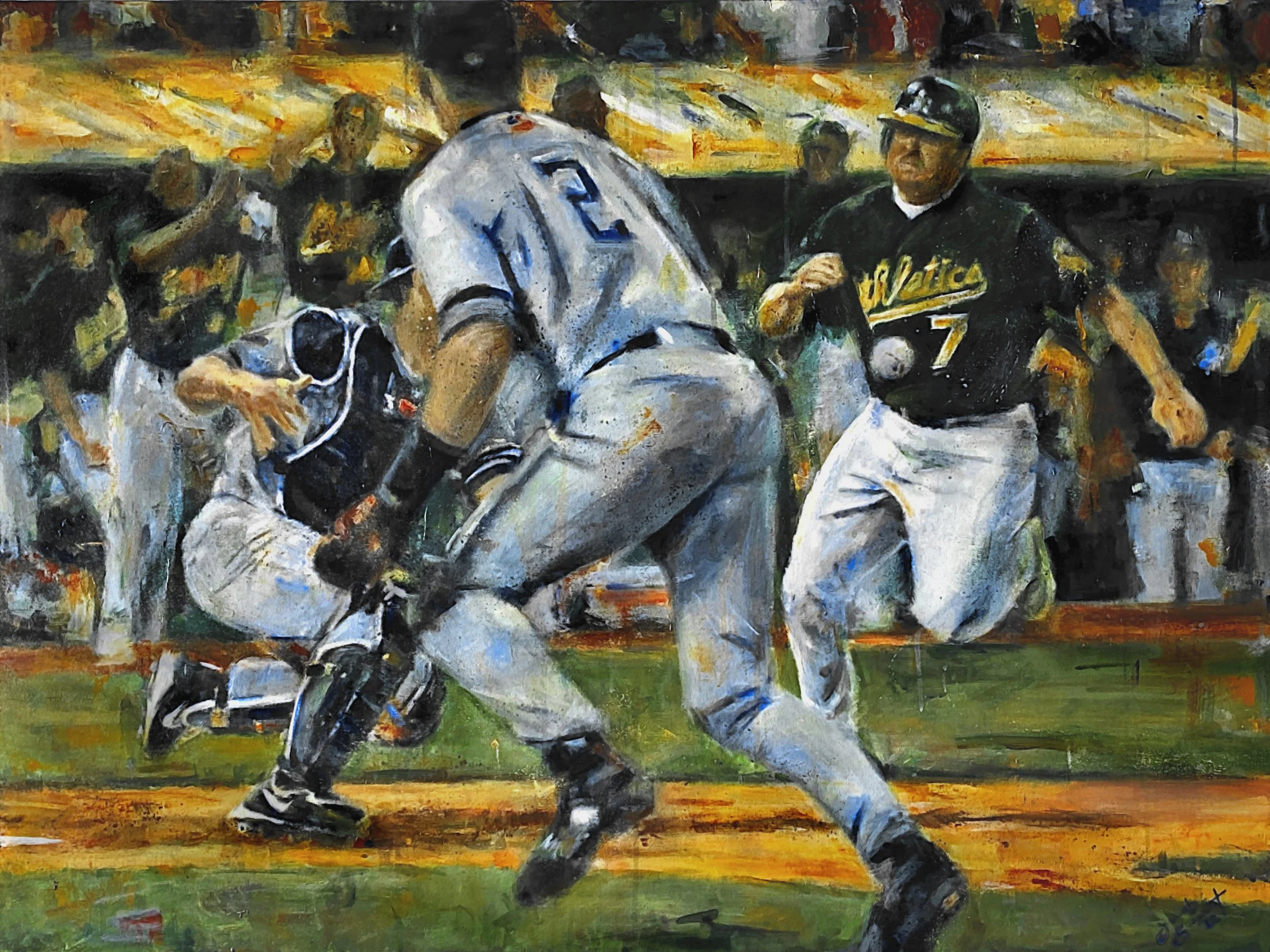
Running toward the first-base line, he reached Spencer’s throw and fielded the ball barehanded on one hop. There was no time to stop, turn and make a conventional throw to the plate.
So, in one motion, Jeter made a backhanded flip toward home.
Posada caught the ball and turned toward Giambi.
Giambi did not slide.
Posada swept his glove across the runner just before Giambi’s foot reached home.
Out.
The Yankees still led, 1–0.
THE TAG
Had Giambi slid—or had Jeter’s flip arrived a fraction later—the tying run might have scored.
The play was close enough that one decision immediately became part of its mythology.
As Giambi approached home, he remained on his feet. Posada received Jeter’s flip, turned and swept the tag toward him as Giambi tried to reach the plate standing up.
Home-plate umpire Kerwin Danley called him out.
Replays showed just how close the play had been, without conclusively settling whether the tag beat Giambi to the plate. Had Giambi slid—or had Jeter’s flip arrived a fraction later—the tying run might have scored.
Instead, the Yankees escaped the seventh with their 1–0 lead intact.
Mussina left after seven scoreless innings. Mariano Rivera recorded the final six outs, and the Yankees won by that same 1–0 score.
Their season was still alive.
And the play that saved it had taken only seconds.
THE AFTERMATH
One play changed the direction of the series.
The Yankees had survived Game 3, but they still trailed Oakland two games to one.
The following night, New York won 9–2, sending the series back across the country for a decisive Game 5 at Yankee Stadium.
There, the Yankees completed the comeback with a 5–3 victory.
After losing the first two games at home, New York had won three straight elimination games to take the series—becoming the first team to win a best-of-five postseason series after losing the first two games at home.
The Yankees advanced through the American League Championship Series and returned to the World Series for the fourth consecutive year. Their run finally ended in Arizona, where the Diamondbacks won Game 7 in the bottom of the ninth.
But the 2001 postseason left Jeter with another defining October moment.
Had Giambi scored, no one can know what would have followed.
What remains is the play itself.
A throw that missed two cutoff men. A shortstop in an unexpected place. A backhanded flip. An out at the plate.
THE LEGACY
The play became part of the Jeter mythology.
Derek Jeter’s career would eventually encompass far more than a single postseason play.
Five World Series championships. More than 3,000 hits. Fourteen All-Star selections. Twenty seasons spent entirely in a Yankees uniform. And, eventually, election to the National Baseball Hall of Fame.
Yet The Flip remains one of the moments most closely associated with him.
Not because it was a spectacular display of speed or power, but because it seemed to distill something that followed Jeter throughout his career: preparation meeting instinct at precisely the right moment.
He knew where to go.
He kept moving when the original play broke down.
And when the ball unexpectedly reached him, he improvised the final few feet.
Years later, the play can appear almost inevitable in highlight reels. In real time, it was anything but.
A throw had missed its targets. A runner was approaching home with the tying run. And a shortstop had positioned himself somewhere few people watching the game expected him to be.
Jeter was there.