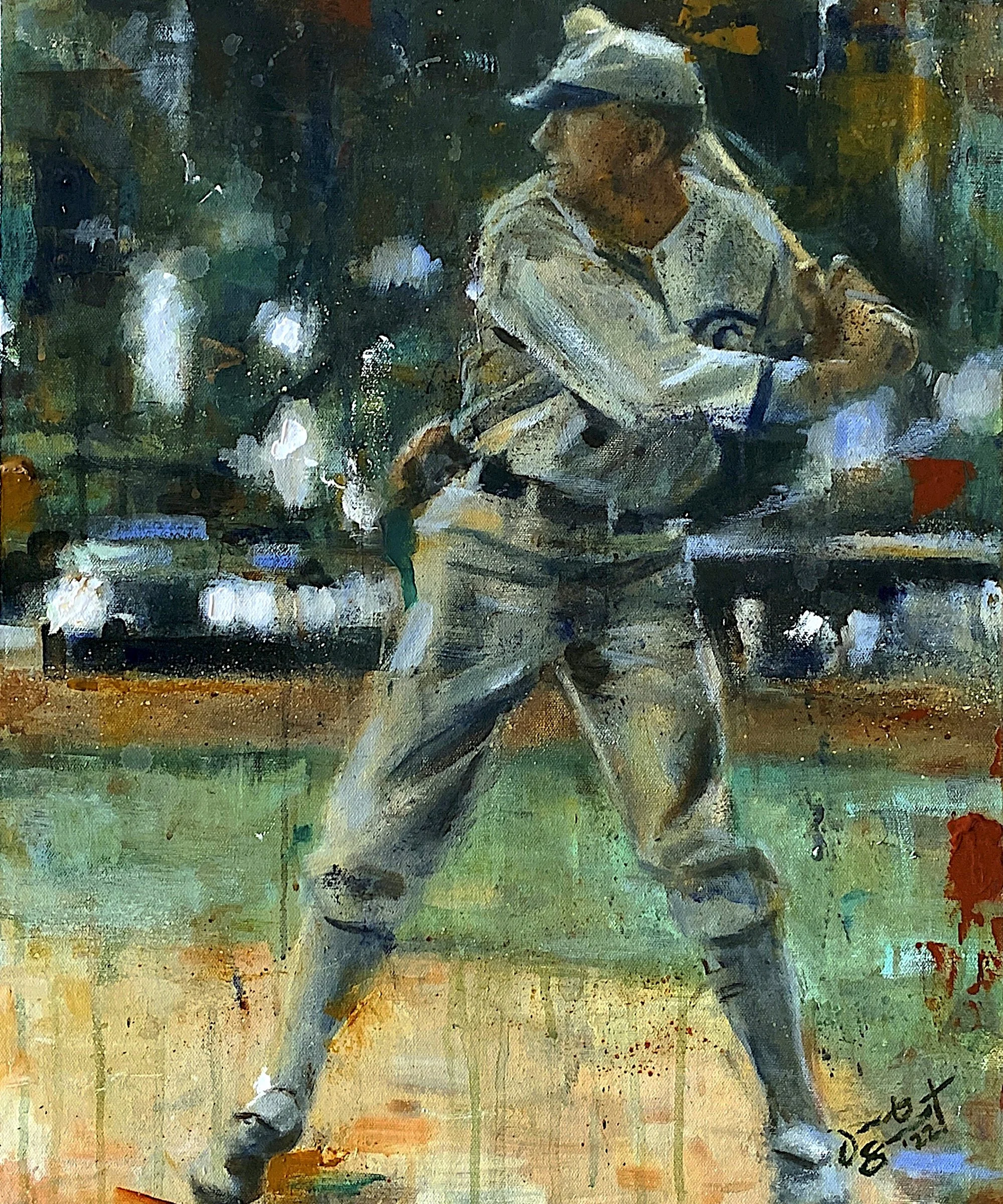
THE STORY
His numbers told one story. His name became inseparable from another.
“Shoeless” Joe Jackson · 1887-1951
Joe Jackson was one of the most gifted hitters of baseball’s early era.
Over thirteen major-league seasons, he compiled a .356 career batting average, a figure that still ranks among the highest in the history of the game. Babe Ruth admired his swing. Jackson could hit for average, run, throw and field, and by the end of the 1910s he had established himself as one of baseball’s great players.
Then came the 1919 World Series.
Jackson and seven of his Chicago White Sox teammates were accused of conspiring with gamblers to deliberately lose the Series to the Cincinnati Reds. The scandal would become one of the darkest episodes in baseball history.
Jackson accepted money connected to the fix. He also hit .375 in the Series, committed no errors and later maintained that he had tried to play to win.
More than a century later, those contradictions remain at the center of his story.
The player was extraordinary. The scandal made certain that baseball would remember something else.
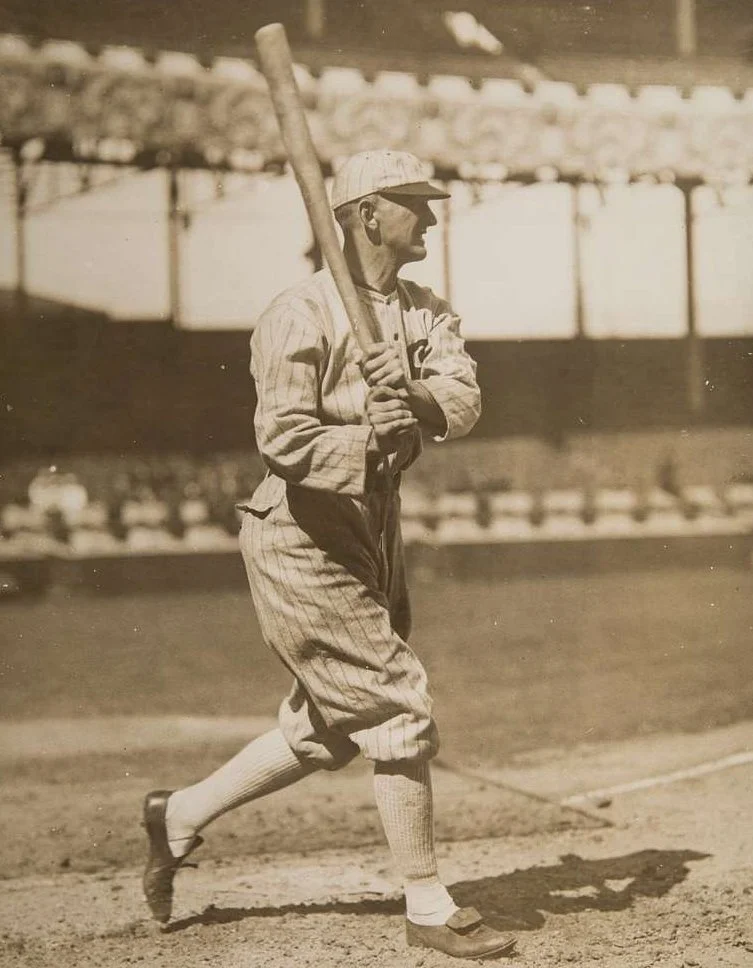
SOUTH CAROLINA
Baseball offered a way beyond the mill.
Joe Jackson was born in Pickens County, South Carolina, in 1887 and grew up in the mill communities around Greenville. Like many children in textile families of the era, he went to work young rather than receiving much formal schooling.
Baseball became his way out.
Jackson began playing for mill teams as a teenager, quickly developing a reputation for an extraordinary natural ability to hit. By 1908, his performance had attracted professional attention, and he joined the Greenville Spinners of the Carolina Association.
It was in Greenville that one of baseball’s most recognizable nicknames began.
During one game, Jackson played in his stocking feet after a new pair of spikes had badly blistered his feet. According to the story Jackson later told, a heckling fan called him a “shoeless” son of a gun.
The name followed him for the rest of his life.
He played one game without shoes. Baseball remembered him forever as Shoeless Joe.
THE MAJOR LEAGUES
Philadelphia wasn’t home. Cleveland was different.
In August 1908, Philadelphia Athletics manager Connie Mack purchased Jackson’s contract from Greenville. The move brought him from the mill communities of South Carolina to one of the largest cities in the country.
The transition was difficult. Jackson was homesick and uncomfortable in Philadelphia, and over the next two seasons he moved between the Athletics and the minor leagues. In 1909 and 1910, he won minor-league batting titles while continuing to struggle to establish himself in Philadelphia.
In July 1910, the Athletics traded him to the Cleveland Naps.
When Jackson finally joined Cleveland that September, something changed. He hit .387 in 20 games to finish the season and earned a permanent place in the lineup.
Then came 1911.
Jackson collected 233 hits and batted .408, establishing himself as one of the finest young hitters in baseball. More than a century later, that average remains the highest ever recorded by a major-league rookie.
Shoeless Joe Jackson had found the place where his extraordinary ability could finally be seen.
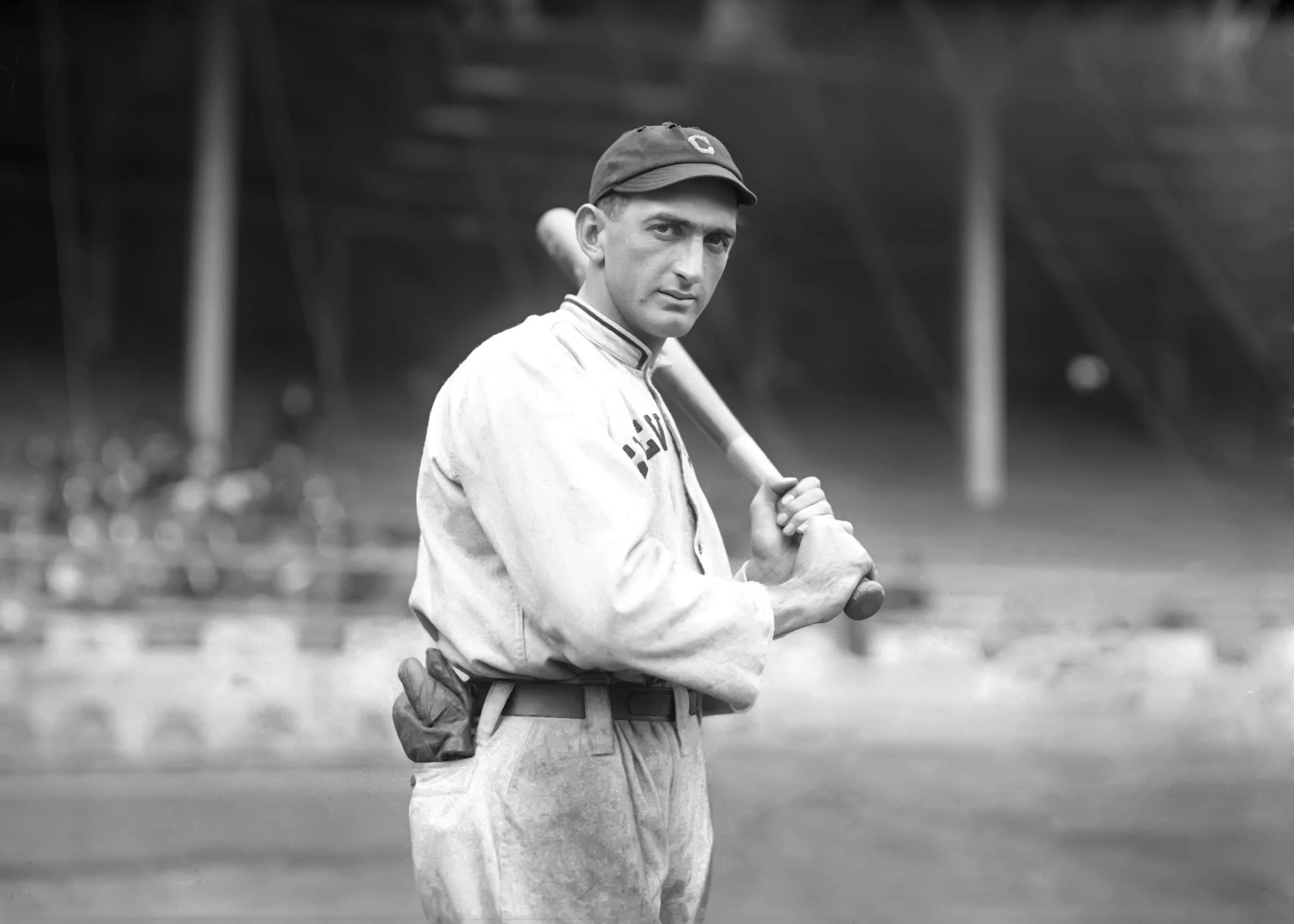
THE HITTER
His swing became the measure for others.
Jackson followed his remarkable 1911 season by batting .395 in 1912, collecting 226 hits and setting an American League record with 26 triples—a mark that has never been surpassed.
In 1913, he hit .373, led the American League in hits, doubles and slugging percentage, and again finished among the league’s most productive hitters. Over those three seasons, Jackson had established himself alongside Ty Cobb as one of the most formidable offensive players in baseball.
But statistics tell only part of the story.
Jackson hit from the left side with his hands together near the bottom of the bat, taking a full, powerful swing at a time when many hitters used shorter motions. His line drives developed a reputation of their own, and other players studied the way he hit.
Among them was Babe Ruth.
In 1919, Ruth told sportswriter Grantland Rice that he had modeled his own swing after Jackson’s. The player who would soon transform baseball with the home run had studied the swing of Shoeless Joe.
Before scandal defined his name, Jackson’s swing was one other great hitters wanted to understand.
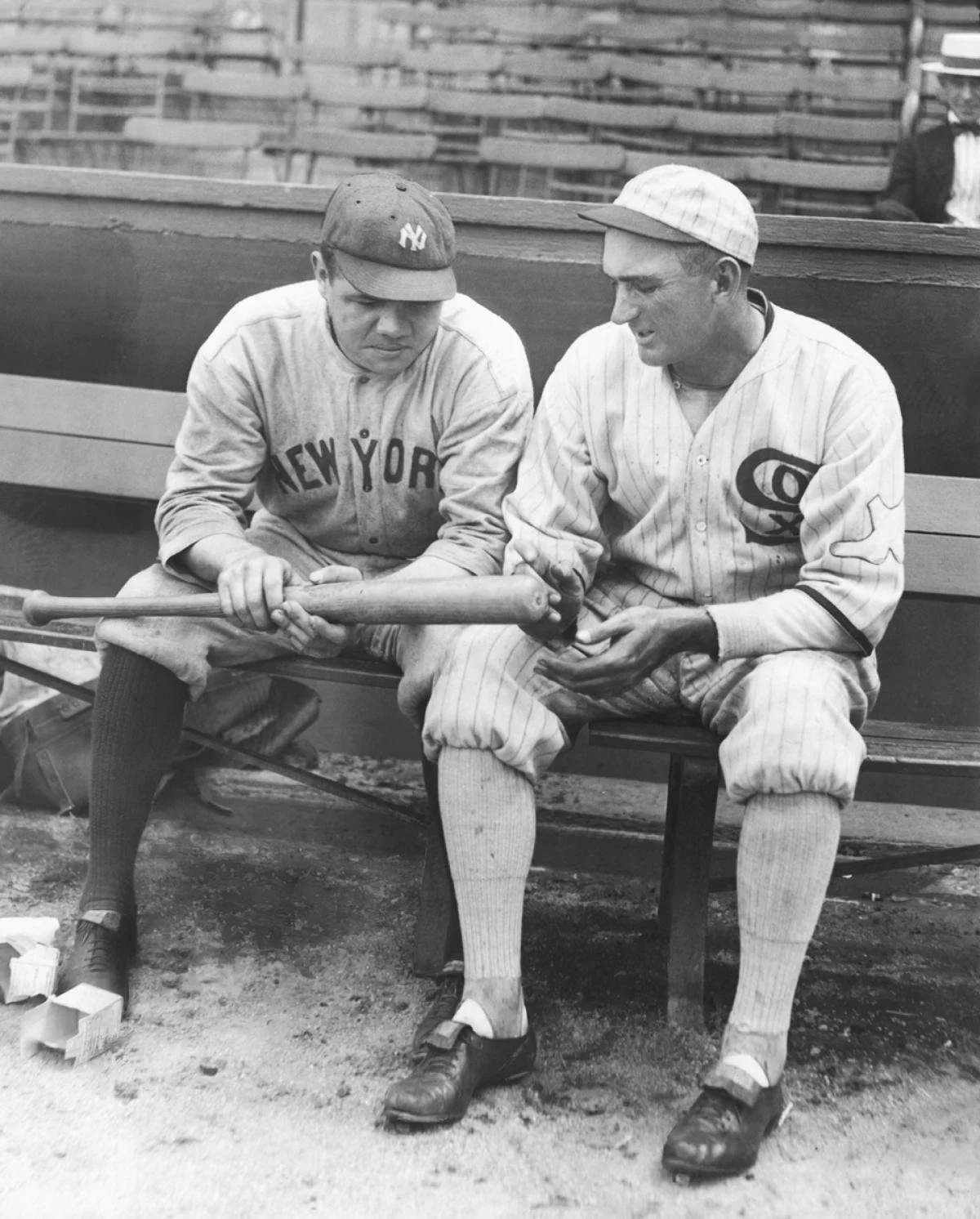
CHICAGO
He joined a team built to win.
In August 1915, Cleveland traded Jackson to the Chicago White Sox. He was joining a talented club that was emerging as one of the strongest teams in the American League.
Jackson quickly became an important part of the lineup. In 1917, he hit .301 as Chicago won 100 games and advanced to the World Series against the New York Giants.
The White Sox won the Series in six games.
For Jackson, it was his first championship. He hit .304 in the Series and played errorless baseball in the outfield.
The following season was disrupted by World War I. Jackson left the White Sox after 17 games and went to work in a Delaware shipyard, where he also played baseball for the company team—a decision that brought criticism at a time when many other major leaguers entered military service.
He returned to Chicago in 1919.
The White Sox were loaded with talent. Eddie Cicotte and Lefty Williams anchored the pitching staff. Eddie Collins was already one of baseball's established stars. Jackson remained one of the game's premier hitters.
Chicago won the American League pennant and entered the World Series as the favorite against Cincinnati.
But beneath one of baseball's best teams, something had already begun to unravel.
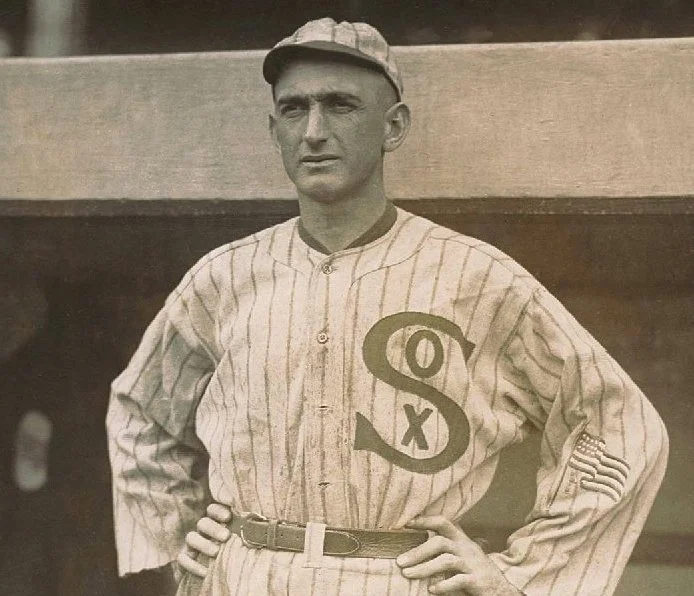
1919
The plan began before the World Series did.
By the time Chicago clinched the American League pennant, conversations about fixing the World Series were already taking place.
First baseman Chick Gandil became a central figure in discussions with gamblers about paying White Sox players to deliberately lose games. The conspiracy eventually drew in several teammates, including pitchers Eddie Cicotte and Lefty Williams.
Joe Jackson’s place in what happened is more difficult to define.
Jackson later acknowledged that he knew about the fix and accepted $5,000 connected to it. According to Jackson, he initially expected a larger amount and attempted to raise concerns about the plot before the Series, but accounts of those events—and of exactly how willingly he participated—have conflicted ever since.
What is certain is that Jackson did not remove himself from the situation. He knew about the conspiracy. Money reached him. And he took the field.
On October 1, 1919, the White Sox and Cincinnati Reds began what was then a best-of-nine World Series.
Chicago lost Game 1, 9–1.
Cincinnati won again the following day.
The heavily favored White Sox were suddenly down two games to none.
Something was wrong. The baseball world just didn't yet know how much.
THE SERIES
The numbers complicated the story.
Whatever Jackson knew before the World Series began, his performance on the field has remained one of the central questions surrounding his role in the scandal.
Over eight games, Jackson collected 12 hits and batted .375, the highest average of any White Sox regular. He drove in six runs, hit the only home run of the Series and committed no errors in the outfield.
Those numbers have often been cited as evidence that Jackson could not have been trying to lose.
The reality is more difficult to resolve.
Critics have pointed to particular moments in the Series—including plays in the outfield and the timing of Jackson’s hits—as evidence that a box score cannot reveal intent. Defenders have argued that his overall performance is difficult to reconcile with a player deliberately trying to fail.
Chicago eventually fell behind four games to one before winning Games 6 and 7. In Game 8, Jackson homered and drove in three runs, but Cincinnati won 10–5 to take the Series.
Jackson finished the Series with numbers that looked nothing like those of a player performing poorly.
But the question was never simply how well he played. It was what he had agreed to do.
THE CONFESSION
Jackson admitted taking the money. What that admission meant became more complicated.
Nearly a year after the World Series, allegations that games had been fixed finally led to a Cook County grand-jury investigation. In September 1920, Jackson testified before the grand jury.
Under oath, he acknowledged that Chick Gandil had approached him about the fix, that he had agreed to participate in exchange for a promised $20,000, and that he ultimately received $5,000 from Lefty Williams.
But Jackson also maintained that he had played to win.
The circumstances surrounding his testimony would later become part of the controversy. Jackson had little formal education and could not read or write well. He testified without independent legal counsel after meeting with Alfred Austrian, an attorney who represented Charles Comiskey and the White Sox organization.
Jackson’s account would change dramatically in the years that followed. He later denied knowingly participating in the fix and disputed much of what had been attributed to him in his 1920 testimony.
Even the legal record became tangled. The original typed transcripts of the grand-jury testimony given by Jackson, Eddie Cicotte and Lefty Williams disappeared from the prosecutor’s office before the criminal trial. But stenographers still had their shorthand notes, allowing replacement transcripts to be prepared and their testimony to be presented to the jury.
The scandal was no longer simply about what had happened on the field.
It had become a story of gamblers, players, money, lawyers—and competing versions of the truth.
THE TRIAL
The jury acquitted him. Baseball did not.
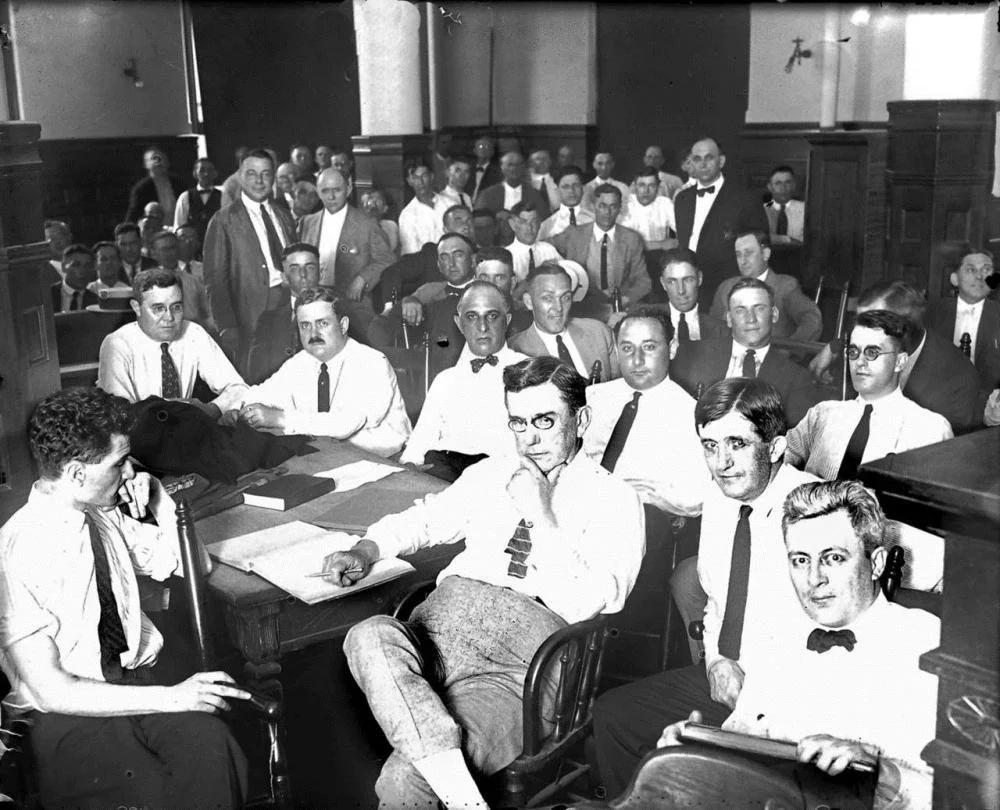
The criminal trial of Jackson, six of his White Sox teammates and several gamblers began in Chicago in the summer of 1921. The players had been charged with conspiracy and fraud stemming from the manipulation of the 1919 World Series.
Although original transcripts of important grand-jury testimony had disappeared from the prosecutor’s office, court stenographers still had their shorthand notes. Replacement transcripts were prepared, and the grand-jury testimony of Jackson, Eddie Cicotte and Lefty Williams was presented at trial.
On August 2, the jury returned its verdict.
Jackson and the six other White Sox players standing trial were acquitted.
According to contemporary accounts, the courtroom erupted in celebration. For Jackson and his teammates, the criminal case was over.
Their baseball careers were not coming back.
The following day, baseball commissioner Kenesaw Mountain Landis issued his decision. Regardless of the verdict, he declared that any player who threw a game, agreed or promised to throw one, or participated in discussions about doing so without reporting it would never again play professional baseball.
Jackson and the seven other White Sox players implicated in the scandal were permanently barred from Organized Baseball.
Jackson was 34 years old. In his final major-league season, 1920, he had batted .382 with 121 runs batted in.
His major-league career was over.
A jury had found him not guilty. Baseball had reached a different verdict.
THE AFTERMATH
Baseball continued. He kept playing. Just not in the major leagues.
The ban ended Jackson’s major-league career, but it did not end his time on a baseball field.
During the years that followed, Jackson continued playing for independent and semiprofessional teams, often under assumed names as promoters sought to avoid attention surrounding his ban. Even away from the major leagues, stories of his ability followed him.
Eventually, Jackson returned to the South. He and his wife, Katie, operated several businesses, including a dry-cleaning establishment and later a liquor store in Greenville, South Carolina.
The game remained close.
Jackson continued playing baseball into his forties and later managed teams as well. By then, the young mill worker who had once escaped South Carolina through baseball had returned home carrying one of the most complicated reputations in the sport.
He never returned to organized professional baseball.
On December 5, 1951, Joe Jackson died in Greenville at the age of 64, only days before he was scheduled to appear at a television program honoring former players.
His major-league career had ended thirty years earlier.
The argument over what that career should mean was only beginning.
THE LEGACY
More than a century later, the case is still not closed.
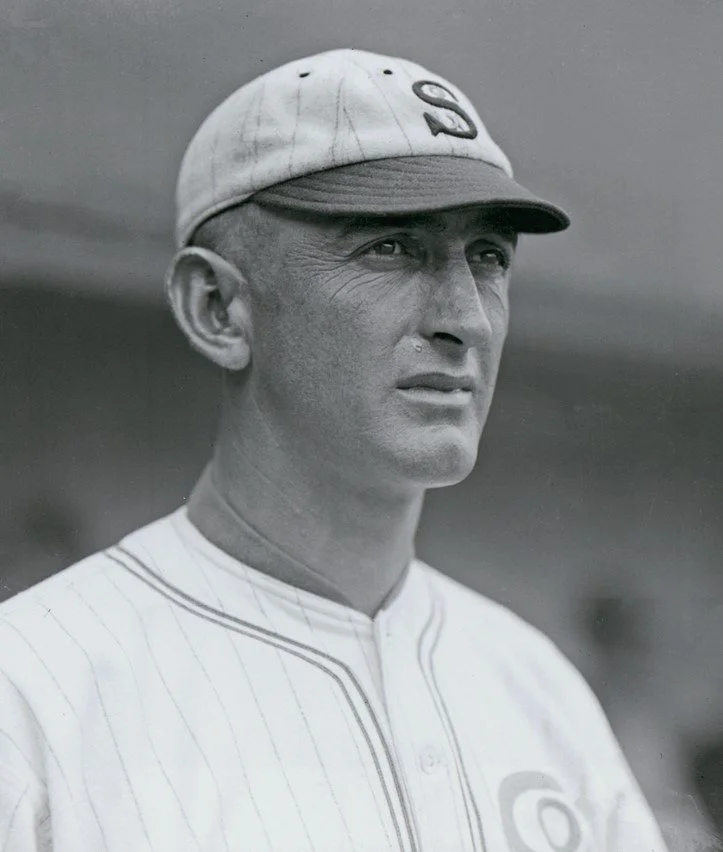
For decades after his death, Joe Jackson remained one of baseball’s most debated figures.
His career numbers made the argument impossible to ignore. Jackson finished with a .356 batting average, 1,772 hits and a lifetime on-base percentage above .420. Few hitters in baseball history had been more productive.
But the 1919 World Series remained inseparable from his name.
Supporters argued that Jackson’s performance during the Series, the circumstances surrounding his grand-jury testimony and the inconsistencies in the historical record justified reconsidering his punishment. Others pointed to facts Jackson himself acknowledged: he knew about the conspiracy, accepted money connected to it and did not report the scheme to White Sox management before or during the Series.
For more than a century, baseball left the punishment unchanged.
Then, in May 2025, Major League Baseball adopted a new policy declaring that permanent ineligibility ends upon the death of the disciplined individual. Jackson and the other deceased members of the 1919 White Sox who had been banned were removed from baseball’s permanently ineligible list.
For the first time in generations, Jackson became eligible to be considered for the National Baseball Hall of Fame.
He has not been elected.
His candidacy may now be considered through the Hall’s Classic Baseball Era process, leaving a question that baseball has argued about for more than a century open once again.
The ban ended. The debate did not.