THE STORY
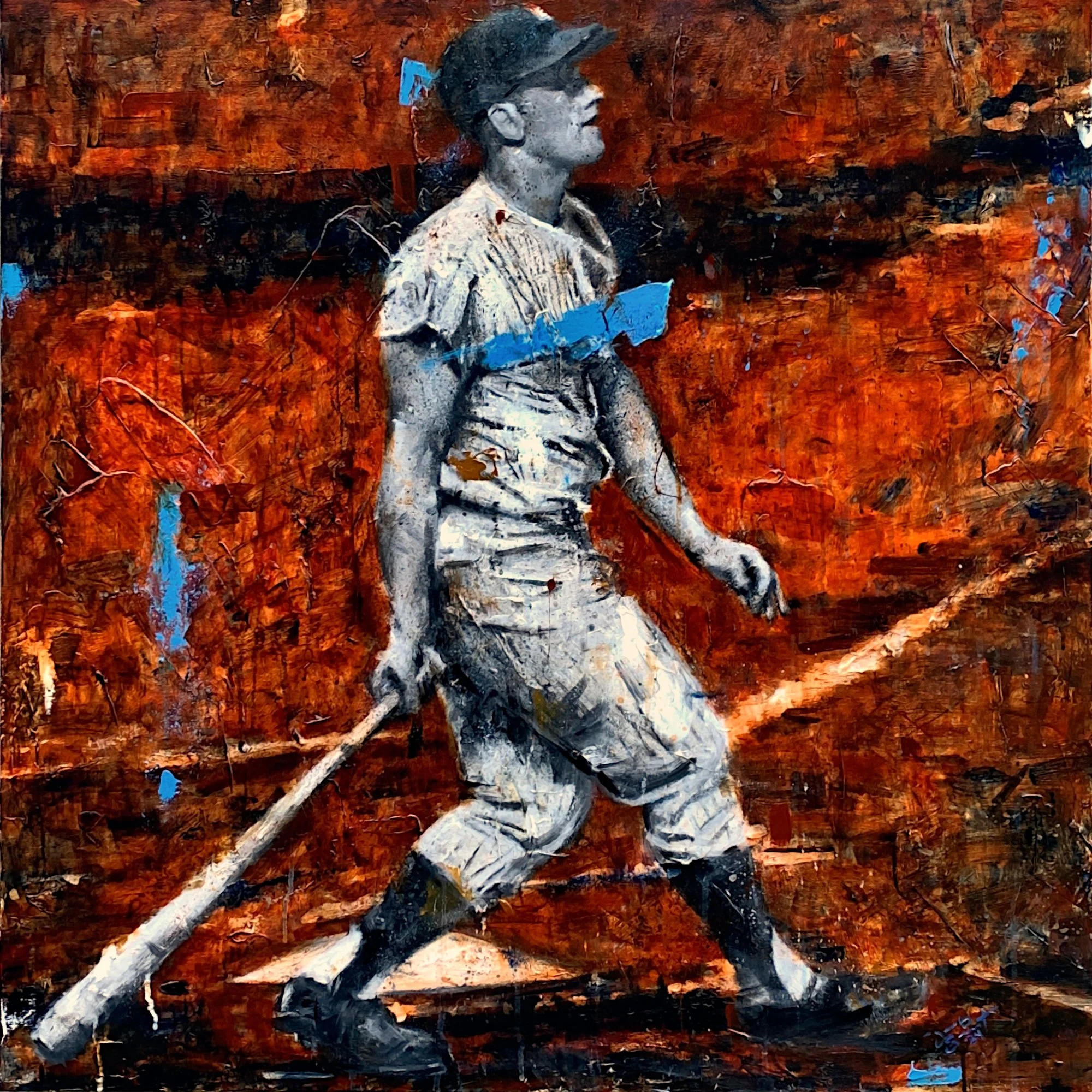
Roger Maris never asked to become a symbol.
Roger Maris · 1934-1985
In 1961, Roger Maris did something baseball had spent more than three decades believing might never happen.
He hit more home runs in a season than Babe Ruth.
But the pursuit of 61 became much more than a chase for a number. It placed a private, understated ballplayer at the center of an argument about records, tradition and who had the right to surpass one of the game’s most revered figures.
For much of the summer, Maris shared that pursuit with Mickey Mantle. By the final weeks, he was chasing Ruth alone.
On October 1, 1961, one swing ended the chase.
The record belonged to Roger Maris. The season had taken far more from him than anyone could see in the number 61.
NORTH DAKOTA
Long before New York, there was Fargo.
Roger Maris was born in Hibbing, Minnesota, in 1934, but his family moved to Fargo, North Dakota, when he was still a child. It was there that Maris grew into an exceptional multi-sport athlete.
At Shanley High School, he starred in football and basketball while playing baseball for Fargo’s American Legion program. His speed was remarkable—in one 1951 football game against Devils Lake, Maris scored four touchdowns on returns.
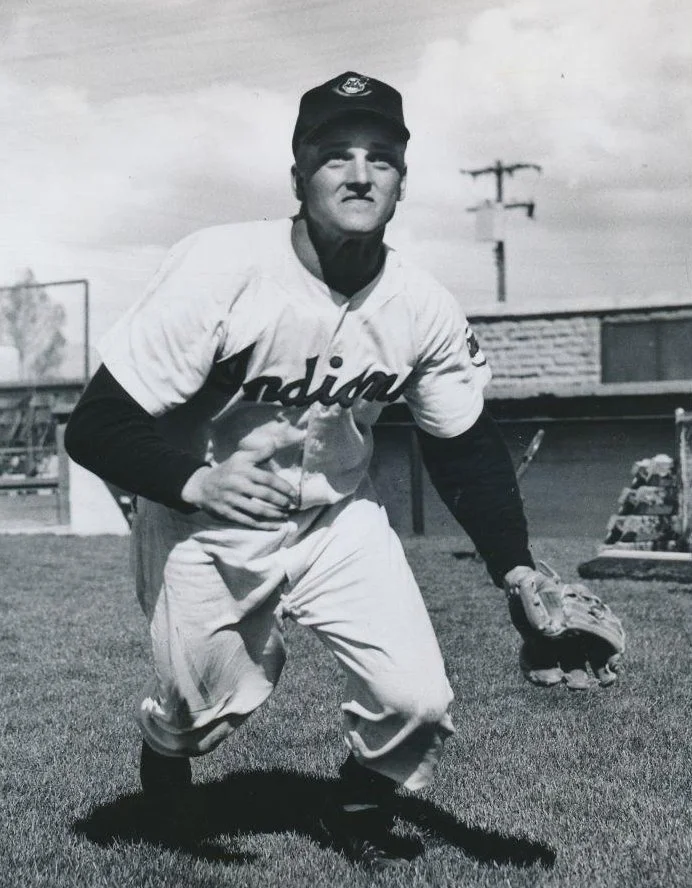
His football ability earned him an opportunity to play at the University of Oklahoma, but Maris chose professional baseball instead. He signed with the Cleveland Indians organization in 1953 and began the long climb through the minor leagues.
Four years later, he reached the majors with Cleveland.
The player who would eventually challenge baseball’s most famous record entered the game with little indication of how famous he would become.
THE ROAD TO NEW YORK
His first opportunities came somewhere else.
Roger Maris made his major-league debut with the Cleveland Indians in 1957. He showed flashes of the power and athleticism that had carried him through the minor leagues, but Cleveland would not be where his career took shape.
During the 1958 season, Maris was traded to the Kansas City Athletics. There, with regular playing time, his potential became increasingly difficult to overlook.
In 1959, Maris hit 16 home runs, drove in 72 runs and was selected to his first All-Star team.
That December, Kansas City traded him to the New York Yankees as part of a seven-player deal.
Maris was joining a team filled with established stars, including Yogi Berra, Whitey Ford and Mickey Mantle. He was not arriving as the face of the franchise.
He would need only one season to become its Most Valuable Player.
NEW YORK
He arrived a newcomer. He finished as the MVP.
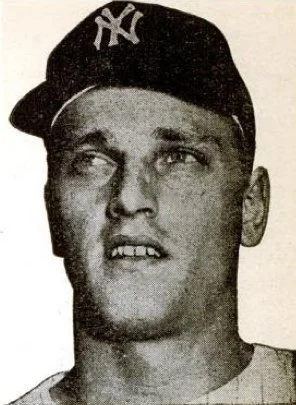
Roger Maris joined the Yankees in 1960 and immediately produced the best season of his career to that point.
He hit 39 home runs, drove in 112 runs and scored 98, helping New York win the American League pennant. He also won his only career Gold Glove for his play in the outfield. His combination of power, defense and run production earned him the American League Most Valuable Player Award—finishing just ahead of teammate Mickey Mantle in the voting.
The season ended in heartbreak. In Game 7 of the World Series, Bill Mazeroski’s ninth-inning home run gave the Pittsburgh Pirates a 10–9 victory and the championship.
But Maris had established himself in New York almost immediately. In a lineup already filled with some of baseball’s most recognizable names, he had become one of its most important players.
One year after arriving in New York, Roger Maris would begin a season that changed the rest of his life.
1961
At first, no one was chasing Babe Ruth.
The 1961 season began with a significant change. The American League had expanded from eight teams to ten, and the schedule grew from 154 games to 162.
Roger Maris did not begin the year looking like a threat to baseball’s most famous home-run record. He hit only one home run in April.
Then the pace changed.
By the end of May, Maris had 12. Mickey Mantle had 14. As the summer unfolded, both Yankees began hitting home runs at a rate that drew increasing attention toward the number that had stood since 1927:
60.
Babe Ruth’s record had survived for 34 years. Now two players wearing Yankee pinstripes were moving toward it at the same time.
They were teammates, very different personalities and increasingly the center of baseball’s attention.
Before long, the country had a name for them: the M&M Boys.
THE M&M BOYS
The public saw a rivalry. They were teammates.
As Maris and Mantle moved closer to Ruth’s record, the home-run chase became a national story.
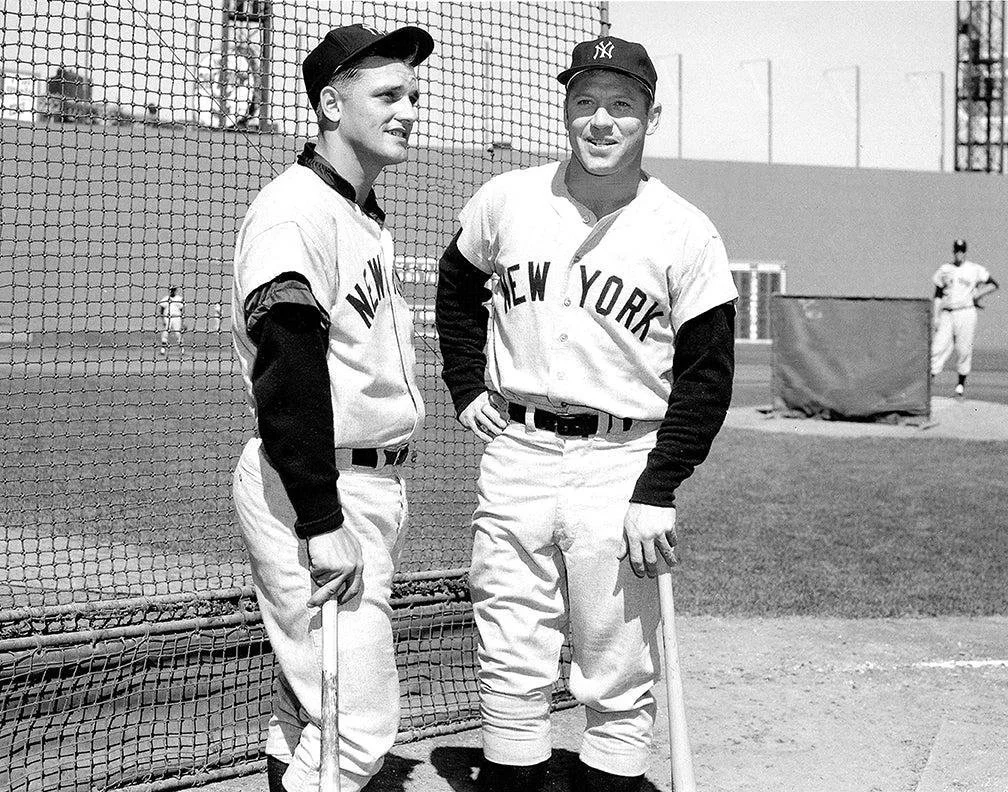
The contrast between them made the story irresistible. Mantle was already a Yankees icon—one of the most famous players in baseball and a natural favorite among New York fans. Maris was quieter, more reserved and only in his second season with the team.
Newspapers increasingly framed the chase as a competition between them. But inside the Yankees clubhouse, the relationship was far less dramatic. Maris and Mantle were teammates and friends. For part of the 1961 season, they even shared an apartment with teammate Bob Cerv.
Neither needed the other to fail in order to succeed.
Still, the attention intensified with every home run. Reporters followed their daily totals. Questions about Ruth became unavoidable. Every at-bat seemed to carry another comparison to 1927.
For Mantle, enormous attention was familiar.
For Maris, it was something else entirely.
The closer he came to 60, the less the story seemed to belong to him.
THE PRESSURE
The closer he came, the heavier the record became.
By late summer, the home-run chase had become one of the biggest stories in American sports. Every Maris at-bat was measured against Babe Ruth, and every home run brought the record—and the scrutiny surrounding it—closer.
The attention was not something Maris particularly enjoyed. Naturally reserved, he found himself surrounded by reporters looking for a story he often had little interest in providing. His relationship with parts of the New York press became increasingly strained.
He was booed by some fans and received hate mail and threats from people who did not want him to surpass Ruth.
There was another complication. Ruth had hit 60 home runs during a 154-game season. The American League now played 162 games. In July, Commissioner Ford Frick announced that if Ruth’s record were not surpassed within the first 154 games, the record books should carry a “distinctive mark” separating the achievements.
The debate only intensified the pressure.
Mantle remained in the chase into September, reaching 54 home runs before health problems forced him from the lineup. Suddenly, Maris was pursuing Ruth alone.
The strain became visible. His hair began falling out in patches, a condition doctors associated with the extraordinary stress he was experiencing.
What had begun as an exceptional baseball season had become something Maris could no longer escape.
THE RECORD
First came 60. Then came one more.
On September 26, 1961, Roger Maris hit his 60th home run of the season at Yankee Stadium, matching the number Babe Ruth had reached 34 years earlier.
But because Maris had reached 60 after the Yankees’ 154th game, the debate surrounding the expanded schedule followed the accomplishment. The chase continued.
Five days later, on October 1, the Yankees played their final game of the regular season against the Boston Red Sox at Yankee Stadium.
In the fourth inning, Maris faced right-hander Tracy Stallard.
He drove a pitch into the right-field stands.
61.
The home run made Roger Maris the first player in major-league history to hit more than 60 home runs in a season. It was also the only run in a 1–0 Yankees victory.
After months of scrutiny, comparisons and questions about whether the record should belong to him at all, the chase was over.
Babe Ruth had held the record for 34 years. With one swing, Roger Maris had surpassed him.
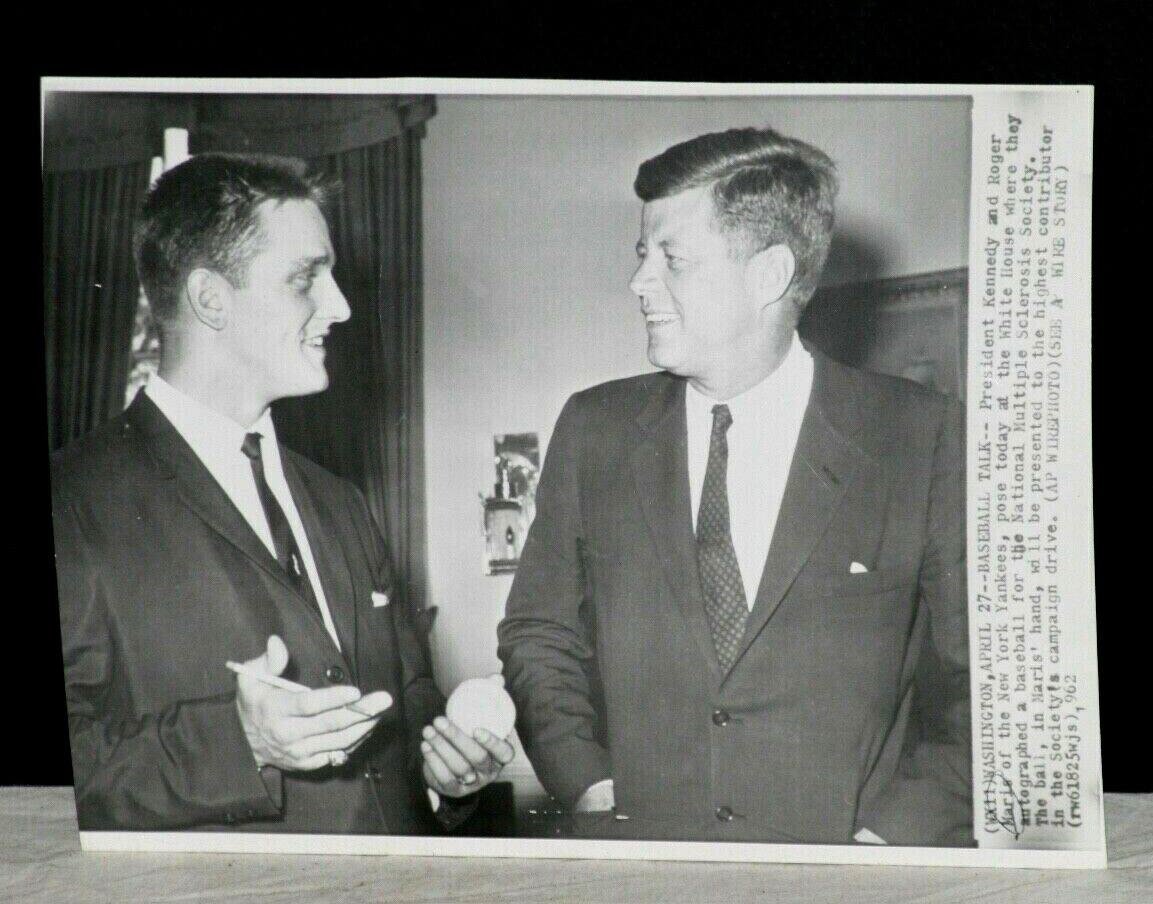
AFTER 61
The record did not define the rest of his career.
Maris finished 1961 with 61 home runs and 141 runs batted in. For the second consecutive season, he was named the American League’s Most Valuable Player.
And there was still a championship to win.
The Yankees defeated the Cincinnati Reds in five games in the World Series, giving Maris his first championship and completing one of the most extraordinary seasons any player had experienced.
He never approached 61 again. But that did not mean his years as an elite player were over. In 1962, Maris hit 33 home runs, drove in 100 runs and helped the Yankees win another World Series championship.
Injuries increasingly interrupted the seasons that followed. After seven years in New York, Maris was traded to the St. Louis Cardinals following the 1966 season.
There, away from the expectations that had followed him in New York, he became part of another championship club. The Cardinals won the 1967 World Series, and Maris returned to the Series again in 1968 before retiring at the end of the season.
The number 61 made Roger Maris famous. His career was larger than the number.
THE LEGACY
The asterisk became part of the story. It was never actually there.
For decades, one of the most repeated stories about Roger Maris was that his 61 home runs carried an asterisk because they came during a 162-game season.
No official asterisk was ever placed beside his record.
For years, record books instead listed Ruth’s 60 and Maris’s 61 separately, distinguishing between the 154-game and 162-game schedules. The distinction followed Maris long after 1961 and reinforced the idea that his accomplishment somehow required an explanation.
In 1991, thirty years after the chase, Major League Baseball’s Committee for Statistical Accuracy eliminated that distinction.
A season was a season.
Roger Maris stood alone with 61.
He did not live to see it. Maris died in 1985 at the age of 51.
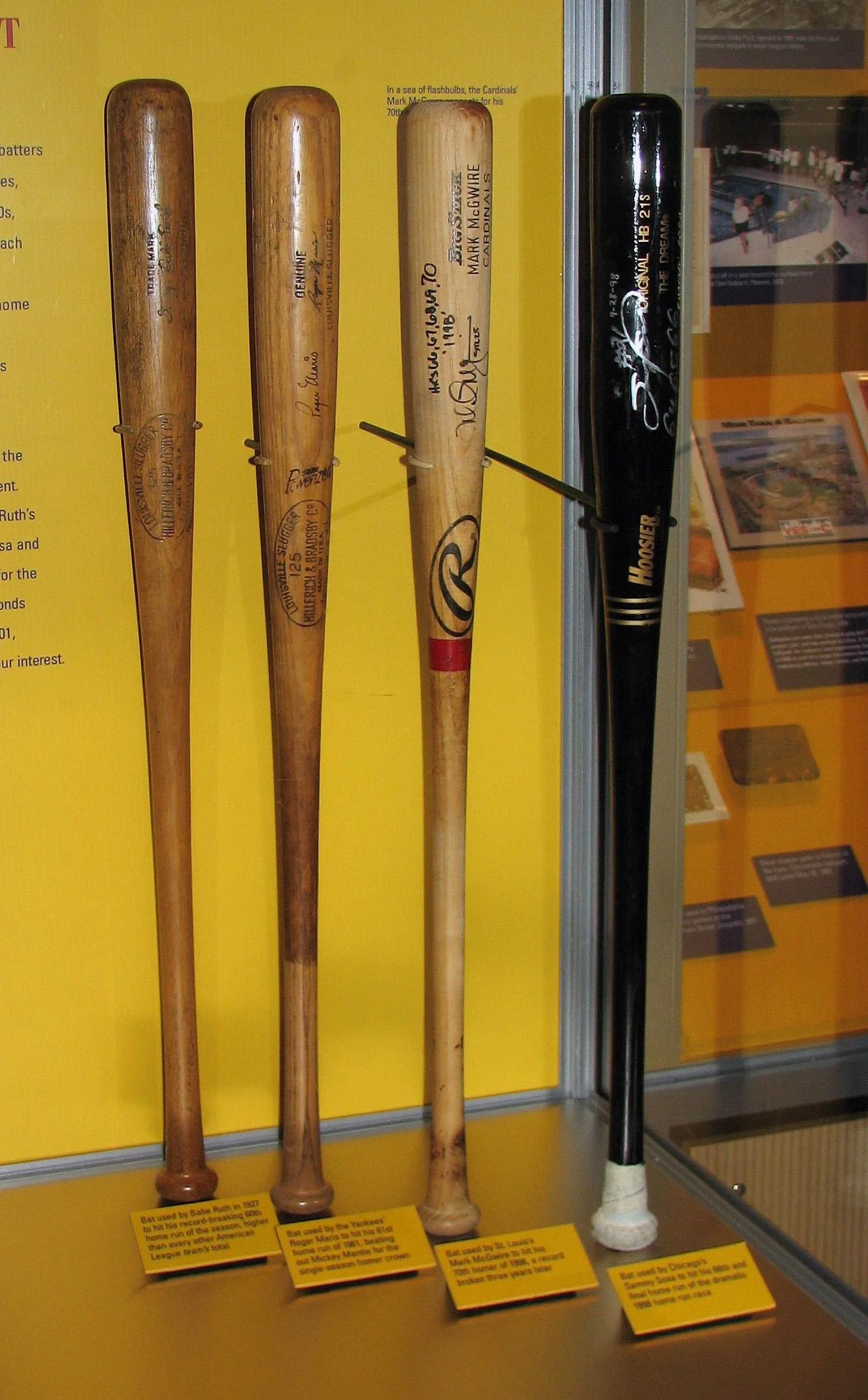
His major-league record eventually fell in 1998, when Mark McGwire surpassed 61 and finished the season with 70 home runs. Maris’s record had stood for 37 years.
But 61 remained the American League and Yankees single-season record until 2022, when Aaron Judge hit 62—61 years after Maris had set it.
The number never disappeared from baseball.
61 became more than the record Roger Maris broke. It became the number by which baseball remembered him.