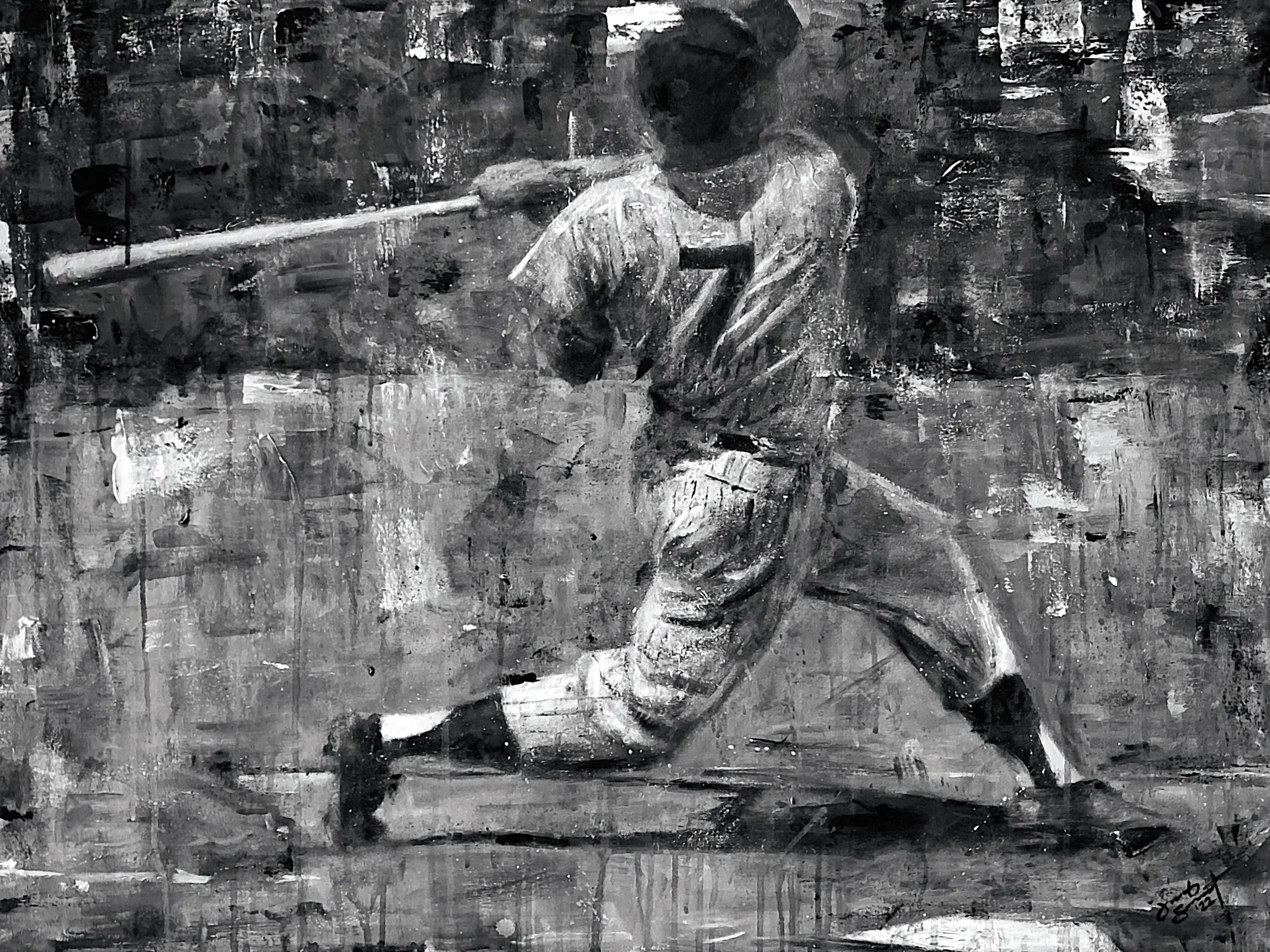
THE STORY
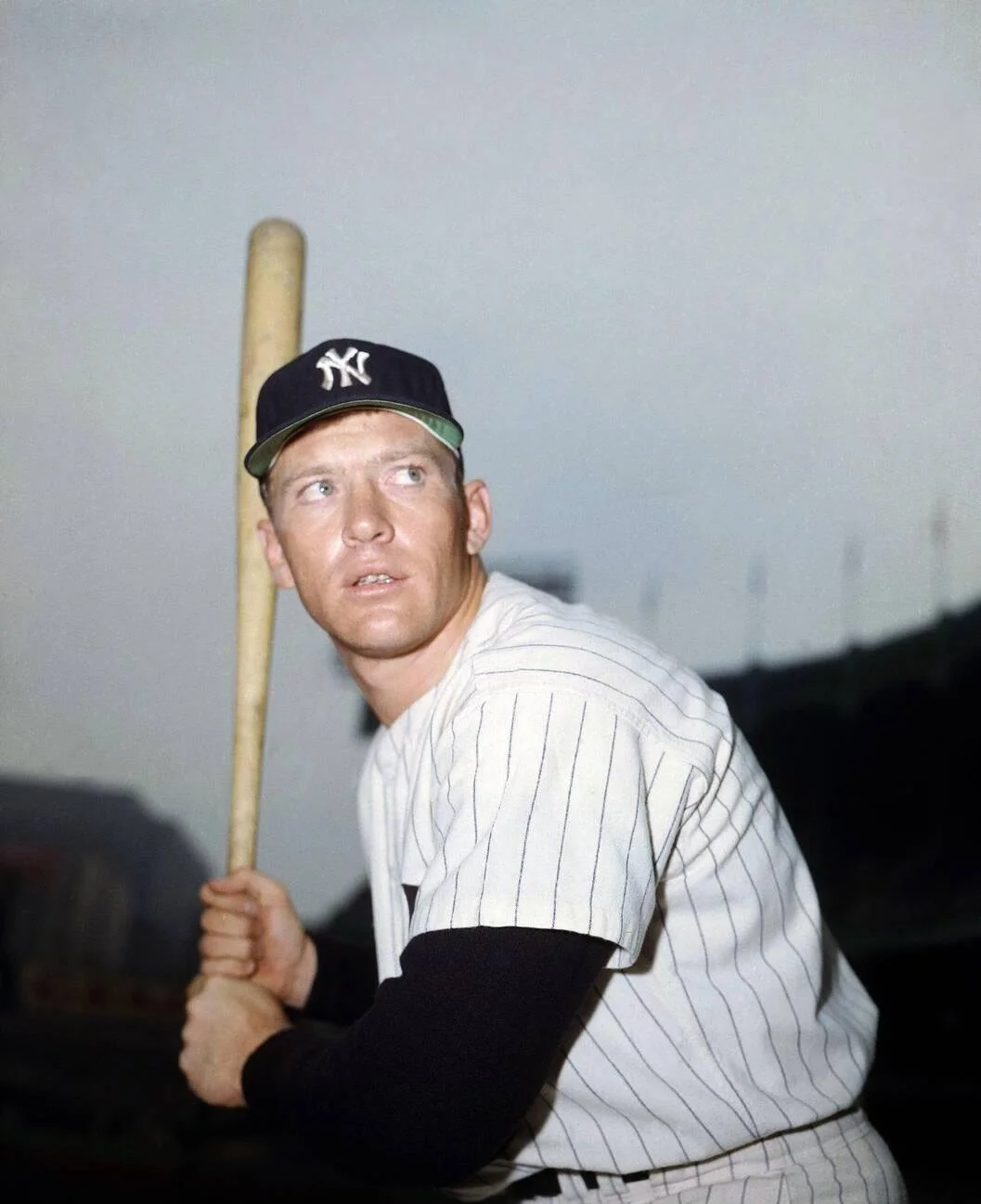
Mickey Mantle carried enormous expectations—and somehow became even larger than them.
1951-1968 · New York Yankees · New York
Mickey Mantle arrived in New York in 1951 as a 19-year-old from Oklahoma with extraordinary speed, immense power and expectations that would have overwhelmed most young players.
Over the next eighteen seasons, he became the defining center fielder of a Yankees dynasty—a switch hitter capable of extraordinary power from either side of the plate, a three-time Most Valuable Player and one of the most recognizable figures of his generation.
But the story of Mickey Mantle was never simply about what he accomplished.
It was also about what he accomplished while rarely being completely healthy.
OKLAHOMA
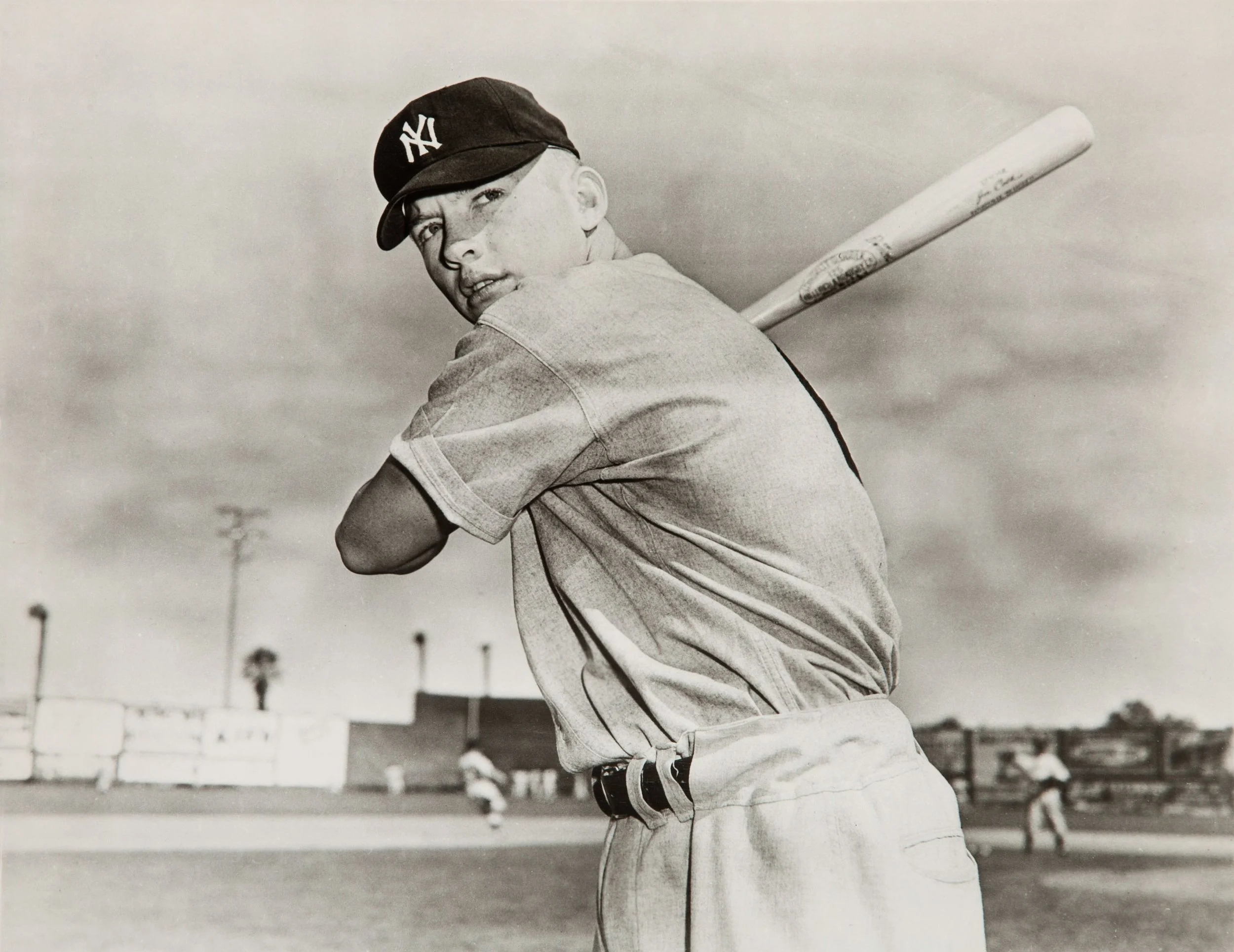
Baseball began at home.
Mickey Mantle was born in Spavinaw, Oklahoma, in 1931 and grew up in the small mining town of Commerce. His father, Elvin “Mutt” Mantle, had played semiprofessional baseball and began teaching his son the game at an early age.
Mutt was right-handed. Mickey’s grandfather was left-handed. Together, they pitched to him from opposite sides, helping develop the switch-hitting ability that would eventually become one of Mantle’s defining traits.
As a teenager, Mantle was already an exceptional athlete. But after suffering an injury to his left leg during a high school football game, he developed osteomyelitis—a serious bone infection that threatened not only his athletic future, but his leg.
Treatment saved it.
The leg would carry him to the major leagues. It would also trouble him for the rest of his life.
NEW YORK
The expectations arrived before he did.
Yankees scout Tom Greenwade began following Mantle while he was playing for the semiprofessional Baxter Springs Whiz Kids. After Mantle graduated from high school in 1949, the Yankees signed him and sent him into their minor-league system.
By the spring of 1951, Mantle was only 19 years old—but his combination of speed and power had already created enormous expectations. After an extraordinary spring training, he made the Yankees’ Opening Day roster.
The timing only magnified them. Joe DiMaggio, one of the most celebrated players in baseball, was entering his final season. Mantle was already being discussed as the young player who might eventually take his place.
His first months in the majors were anything but effortless. Mantle struggled, was sent back to the minors and briefly considered walking away from baseball altogether. His father drove to see him and challenged him to decide whether he was ready to quit.
Mantle returned to New York.
Before the season was over, he would find himself playing in his first World Series—and suffer an injury that changed the rest of his career.
THE INJURY
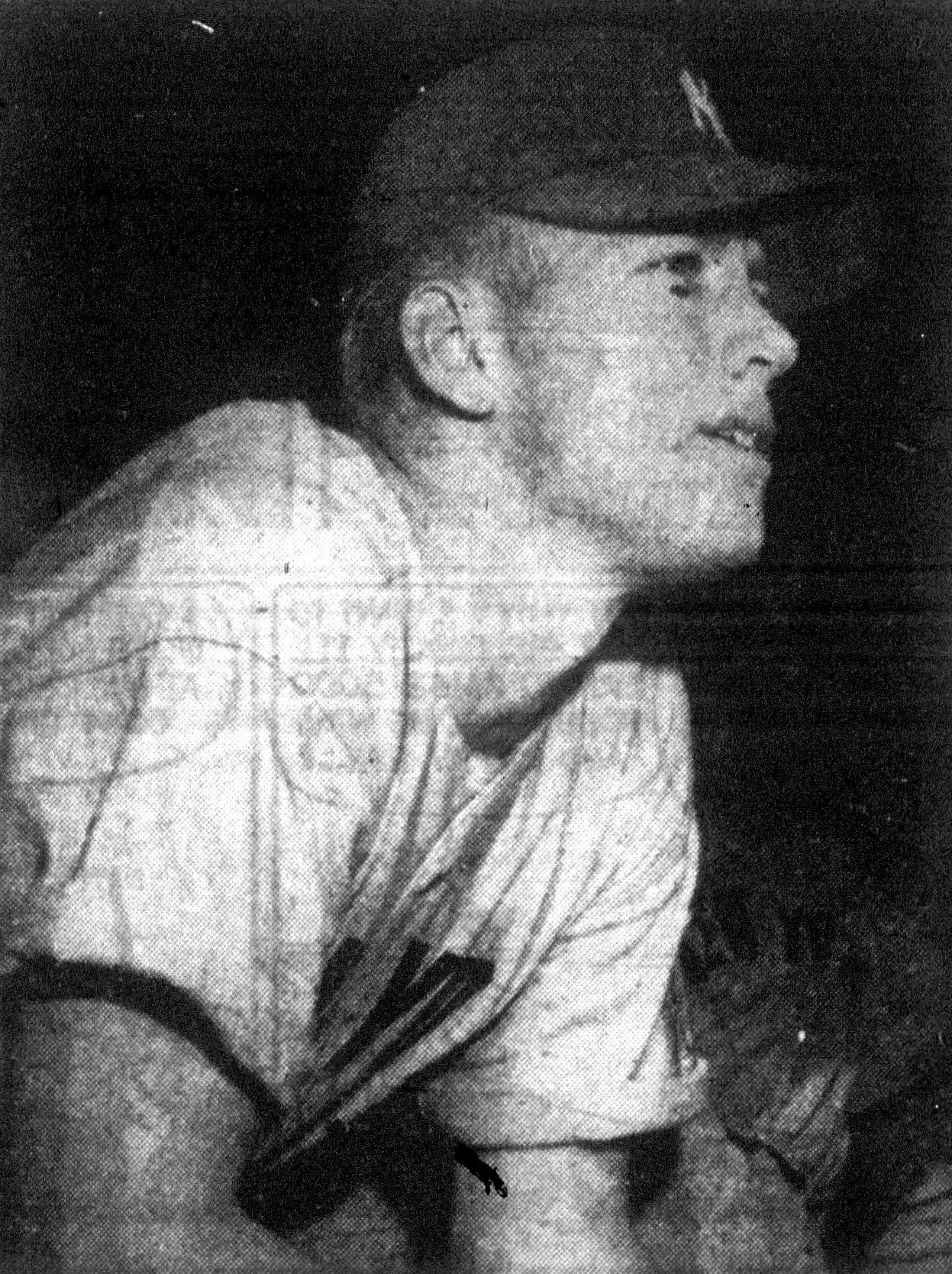
One step changed everything.
In Game 2 of the 1951 World Series, Mantle was playing right field alongside Joe DiMaggio when Willie Mays lifted a fly ball toward right-center.
As Mantle raced toward the ball, DiMaggio called him off. Mantle pulled up and caught his spikes on the rubber cover of a drain pipe in the outfield grass. He went down immediately.
It would become the first of a remarkable series of injuries that followed him throughout his career. Mantle continued to play with extraordinary speed and power, but the physical gifts that had made him such an unusual prospect would increasingly exist alongside chronic pain.
Mickey Mantle would spend the rest of his career showing baseball what he could do—and leaving people to wonder what he might have done completely healthy.
CENTER FIELD
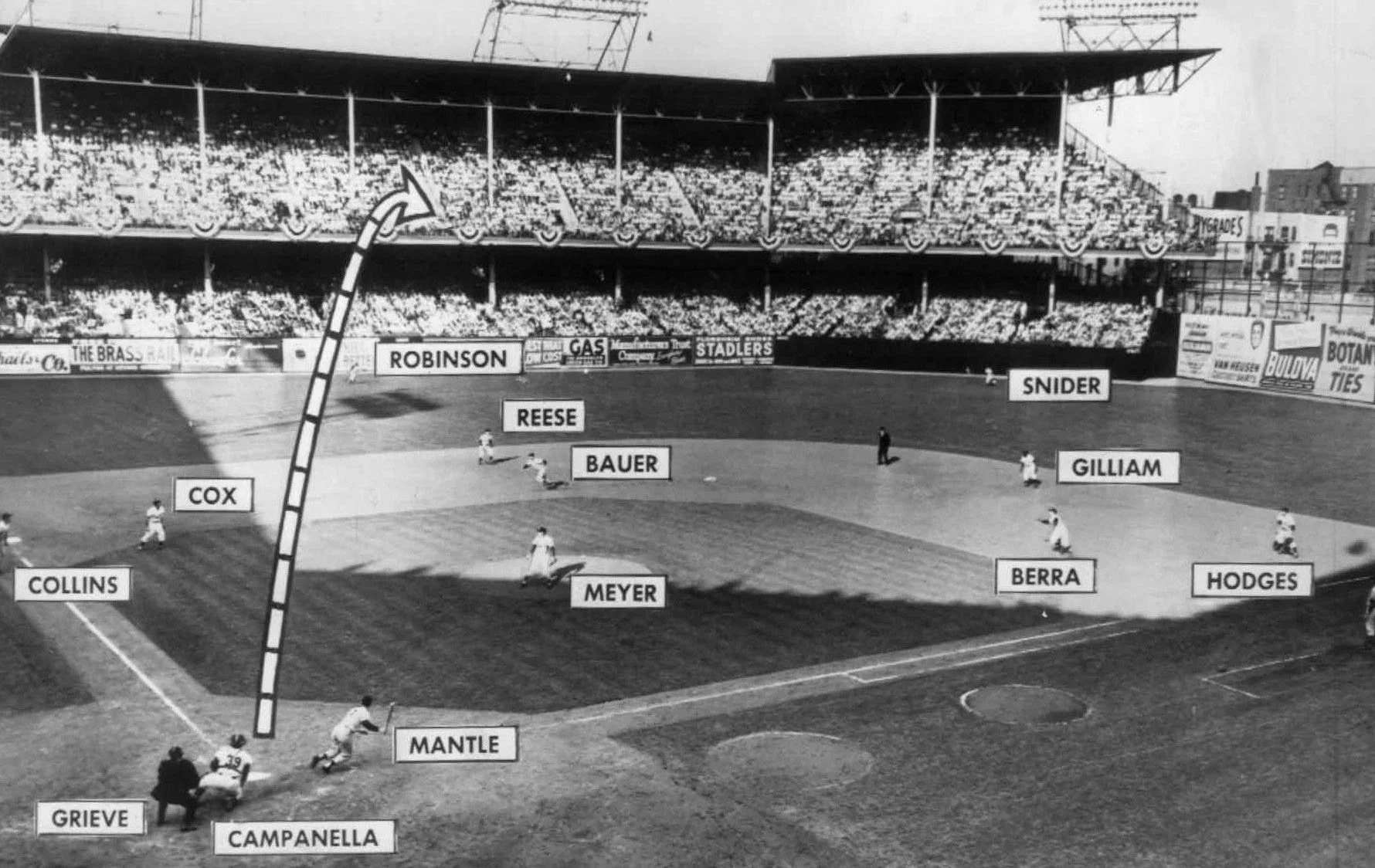
DiMaggio left. Mantle took his place.
Joe DiMaggio retired after the 1951 season, leaving behind one of the most visible positions in American sports. In 1952, the Yankees moved Mickey Mantle into center field.
He was only 20 years old.
Mantle responded by hitting .311 with 23 home runs and 87 runs batted in, earning his first All-Star selection. The Yankees returned to the World Series, where Mantle hit the first two of his eventual record 18 World Series home runs and helped New York defeat the Brooklyn Dodgers in seven games.
The championships kept coming. Mantle’s first three seasons in the major leagues ended with three consecutive World Series titles, placing the young center fielder at the heart of a Yankees dynasty almost immediately.
But Mantle was still developing.
The extraordinary speed remained. The switch-hitting power continued to grow. And by the middle of the decade, the player once expected to succeed Joe DiMaggio was beginning to establish an identity entirely his own.
In 1956, everything came together.
THE TRIPLE CROWN
For one season, Mantle led everyone.
In 1956, Mickey Mantle reached a level even the enormous expectations surrounding him had not predicted.
He hit .353 with 52 home runs and 130 runs batted in, leading the American League in all three categories and winning the Triple Crown.
Mantle also led the league in runs scored and slugging percentage and was named the American League’s Most Valuable Player. He was 24 years old.
The Yankees returned to the World Series against the Brooklyn Dodgers. Mantle homered three times during the Series—including a home run in Don Larsen’s perfect game—and New York won the championship in seven games.
It was the season when Mantle’s remarkable combination of speed, power and switch-hitting ability seemed to fully converge.
The expectations were no longer about what Mickey Mantle might become. He had become the best player in baseball.
THE CHASE
Two Yankees chased a record that had stood for 34 years.
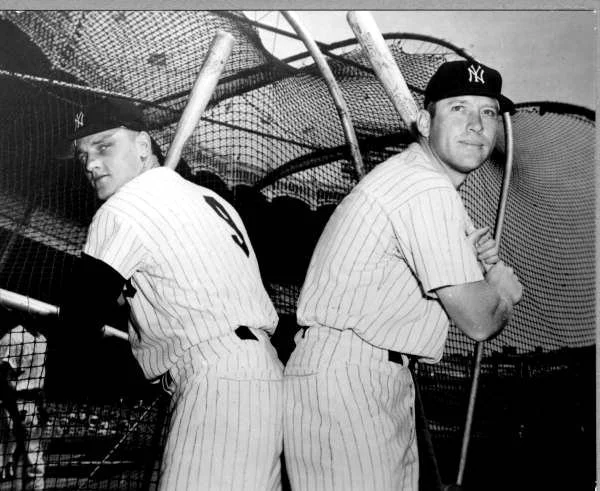
By 1961, Mantle was firmly established as one of baseball’s greatest stars. Then a quiet right fielder named Roger Maris joined him in a season that captured the attention of the country.
Babe Ruth’s record of 60 home runs, set in 1927, had endured for more than three decades. As the summer progressed, both Mantle and Maris remained within reach of it.
The teammates became known as the “M&M Boys.” Their pursuit unfolded under enormous attention, with nearly every home run bringing renewed comparisons to Ruth and speculation over which Yankee—if either—might reach 60.
Mantle hit his 54th home run on September 23, leaving him only six behind Ruth. But illness forced him from the lineup again, effectively ending his pursuit.
Maris continued.
On the final day of the regular season, he hit his 61st home run at Yankee Stadium and became the first player to surpass Ruth’s single-season total.
Mantle finished with 54 home runs—the most he would ever hit in a season.
For much of that summer, baseball watched two teammates chase the most famous number in the game. In the end, only one remained in the race.
THE TOLL
The talent remained. So did the pain.
As Mantle moved through his thirties, the injuries that had followed him since the beginning of his career became increasingly difficult to overcome.
His knees were a constant problem, but they were hardly the only one. Over eighteen seasons, Mantle played through an extraordinary collection of injuries involving his legs, shoulders, ribs and hands, along with repeated surgeries and hospital stays.
And still, he produced.
He won his third American League Most Valuable Player Award in 1962, hitting 30 home runs and leading the Yankees to another World Series championship. Even as his speed diminished and staying on the field became more difficult, his power and ability to reach base remained.
By the time Mantle retired after the 1968 season, he had hit 536 home runs, won three MVP awards, been named to 20 All-Star Games—including the years when two games were played each season—and played on seven World Series championship teams.
He had also hit 18 World Series home runs—a record that still stands.
By the end, greatness and physical decline had become inseparable parts of the same story.
THE LEGACY
No. 7 became inseparable from The Mick.
Mickey Mantle played his final game in 1968 and announced his retirement the following spring. He had spent his entire eighteen-year major-league career with the New York Yankees.
The Yankees retired his number 7 in 1969, placing it alongside the numbers of the legends who had preceded him. Five years later, Mantle was elected to the National Baseball Hall of Fame in his first year of eligibility.
His statistics secured his place among baseball’s greats. But numbers only partly explain the hold Mantle maintained on generations of fans.
He had inherited center field from Joe DiMaggio, played through the final great years of the Yankees dynasty and become one of the defining faces of baseball in postwar America. For countless kids who never saw him play—and others who discovered him decades later—Mantle represented something almost mythic: enormous power, breathtaking speed, vulnerability and the possibility of what might have been.
The injuries limited the player. They never diminished the legend.
A PERSONAL CONNECTION
Long before I painted him, Mickey Mantle was my favorite player.
I discovered Mickey Mantle when I was a kid, long after his playing career had ended. I had a book about baseball’s greatest players, and something about Mantle immediately stood out to me.
He was a switch hitter, so I decided I wanted to be one too. I would stand in the backyard and practice hitting from both sides of the plate, trying to imitate a player I had never actually seen play.
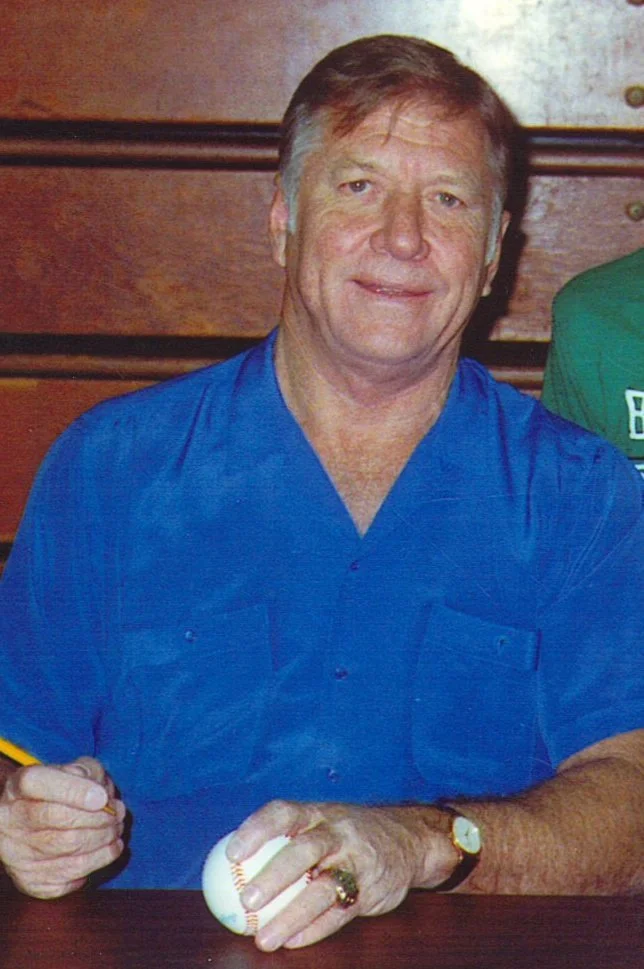
My grandfather knew how much I admired him and eventually gave me one of the pieces of baseball history I’ve treasured most—a baseball signed by Mickey Mantle.
Years later, when I began painting baseball, it felt almost inevitable that Mantle would eventually find his way onto the canvas.
Some subjects begin with history. This one began much earlier.