THE STORY
Jackie Robinson changed more than baseball.
April 15, 1947 · Ebbets Field · Brooklyn, New York
When Jackie Robinson stepped onto the field for the Brooklyn Dodgers on April 15, 1947, he became the first Black player of the 20th century to appear in the National or American League.
His debut broke a color barrier that had excluded Black players from those leagues for decades. But Robinson’s story was never defined by a single day.
What followed demanded extraordinary ability, restraint and resilience—and changed both baseball and American history.
BEFORE BROOKLYN
He was already accustomed to challenging barriers.
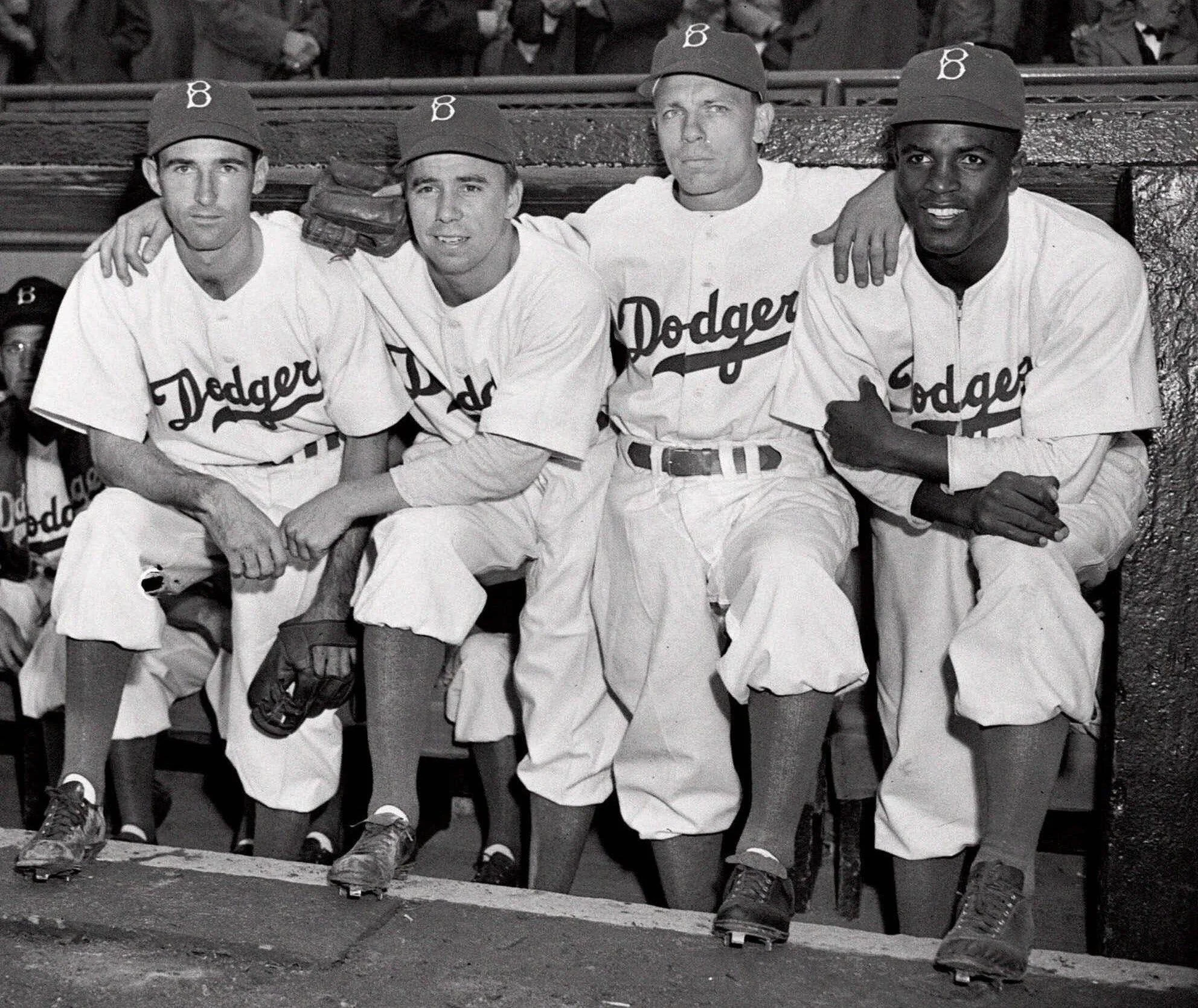
Jackie Robinson’s path to Brooklyn did not begin with baseball. A remarkable multi-sport athlete, he lettered in four sports at UCLA before serving in the U.S. Army during World War II.
In 1944, while stationed at Fort Hood, Texas, Robinson was riding an Army bus when the driver ordered him to move to the back. Although military buses had been ordered desegregated, Robinson refused. The confrontation ultimately led to a court-martial on charges stemming from the incident. He was acquitted of all charges.
After leaving the Army, Robinson joined the Kansas City Monarchs of the Negro American League in 1945. That season put him on the path toward Branch Rickey—and Brooklyn.
THE CHOICE
He was chosen for more than his ability.
Branch Rickey had been quietly searching for the player who could challenge organized baseball’s color barrier. The choice required more than talent. He needed someone capable of enduring the hostility he knew would follow.
On August 28, 1945, Robinson met with Rickey in his Brooklyn office. During the meeting, Rickey acted out the insults and confrontations Robinson might face, testing how he would respond. The challenge would be extraordinary: compete at the highest level while agreeing not to retaliate against those determined to make him fail.
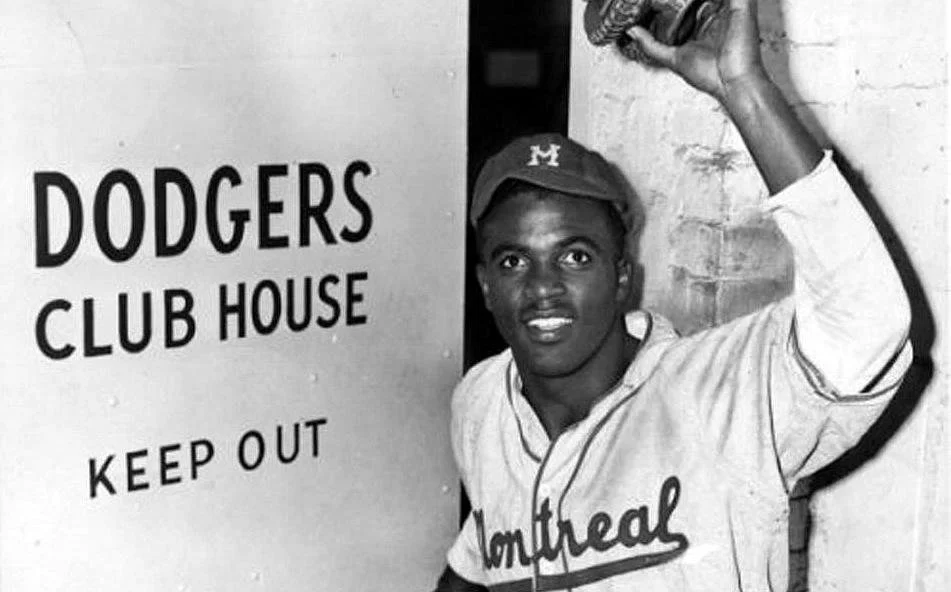
On October 23, 1945, Robinson signed with the Montreal Royals, the Dodgers’ top minor-league affiliate. Before Brooklyn could happen, he would first have to prove himself in Montreal.
MONTREAL
Before Brooklyn, there was Montreal.
Robinson joined the Montreal Royals for the 1946 season, becoming the first Black player in the 20th century to play in Organized Baseball—the affiliated major- and minor-league system that had excluded Black players for decades.
The season offered an early glimpse of what was to come. Robinson faced hostility and discrimination on the road, particularly during spring training in the segregated South. But on the field, he answered with performance.
He won the International League batting title with a .349 average and helped Montreal capture the league pennant and the Little World Series championship. By the end of the season, the question was no longer whether Robinson could compete. Brooklyn was next.
APRIL 15, 1947
The barrier was broken.
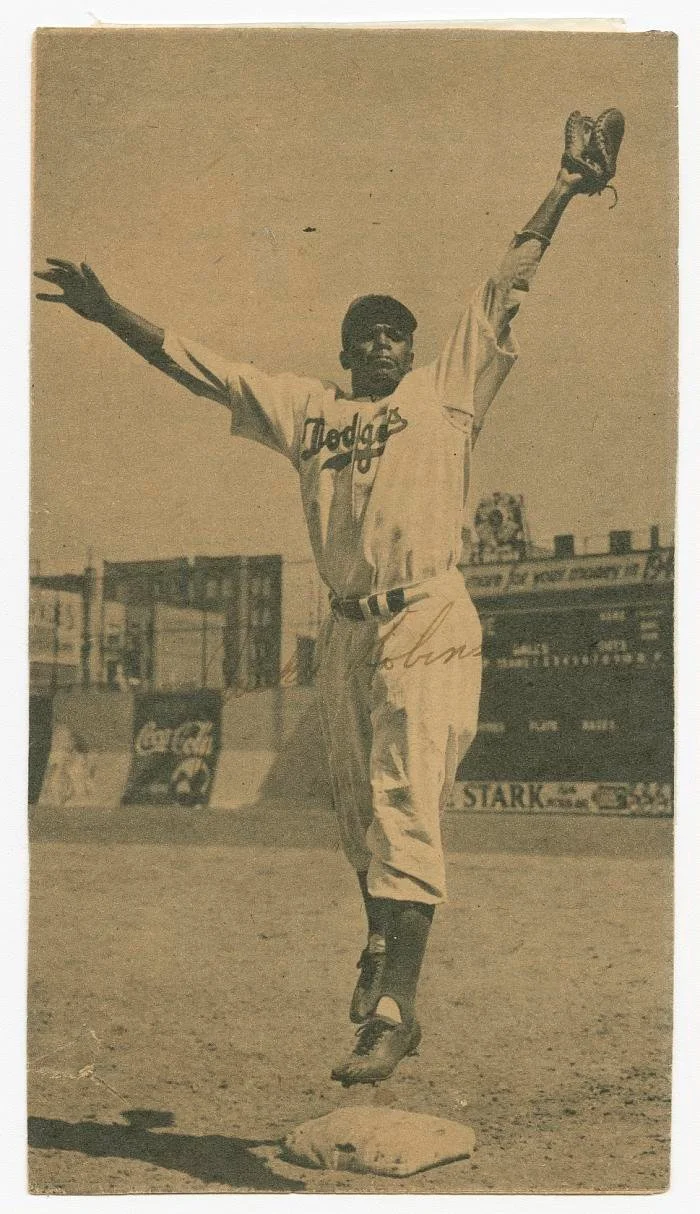
On Opening Day at Ebbets Field, Jackie Robinson took his place at first base for the Brooklyn Dodgers. More than 26,000 spectators were there as a barrier that had stood for decades was finally broken.
Robinson went hitless that afternoon, but in the seventh inning he reached base on an error and scored the go-ahead run in Brooklyn’s 5–3 victory over the Boston Braves. The significance of the day, however, extended far beyond the box score.
The achievement belonged to Robinson, but the burden did too. Breaking the barrier meant entering a season in which every game would be played under extraordinary scrutiny—and in the face of hostility that extended far beyond the field.
THE RESISTANCE
Breaking the barrier did not end the fight.
Robinson faced racist abuse from opposing players, fans and even members of his own team. He received threats against himself and his family, was thrown at by opposing pitchers and entered ballparks where hostility followed him from the dugout to the stands.
During that first season, Robinson carried an additional burden: he had agreed not to answer the abuse with retaliation. His response had to come through restraint—and through his play.
He did exactly that. Robinson hit .297, led the National League with 29 stolen bases and helped Brooklyn win the pennant. At season’s end, he received the inaugural Rookie of the Year Award.
THE PLAYER
He didn’t simply belong. He excelled.
By 1949, Robinson had become one of the best players in baseball. That season he won the National League batting title with a .342 average, led the league with 37 stolen bases, drove in a career-high 124 runs and was named the league’s Most Valuable Player.
Over ten seasons with Brooklyn, Robinson became a six-time All-Star and helped lead the Dodgers to six National League pennants. In 1955, Brooklyn finally defeated the New York Yankees to win the franchise’s first World Series championship.
The significance of Robinson’s career cannot be separated from the barrier he broke. But neither should his ability as a ballplayer be overshadowed by it. He changed the game while becoming one of its great players.
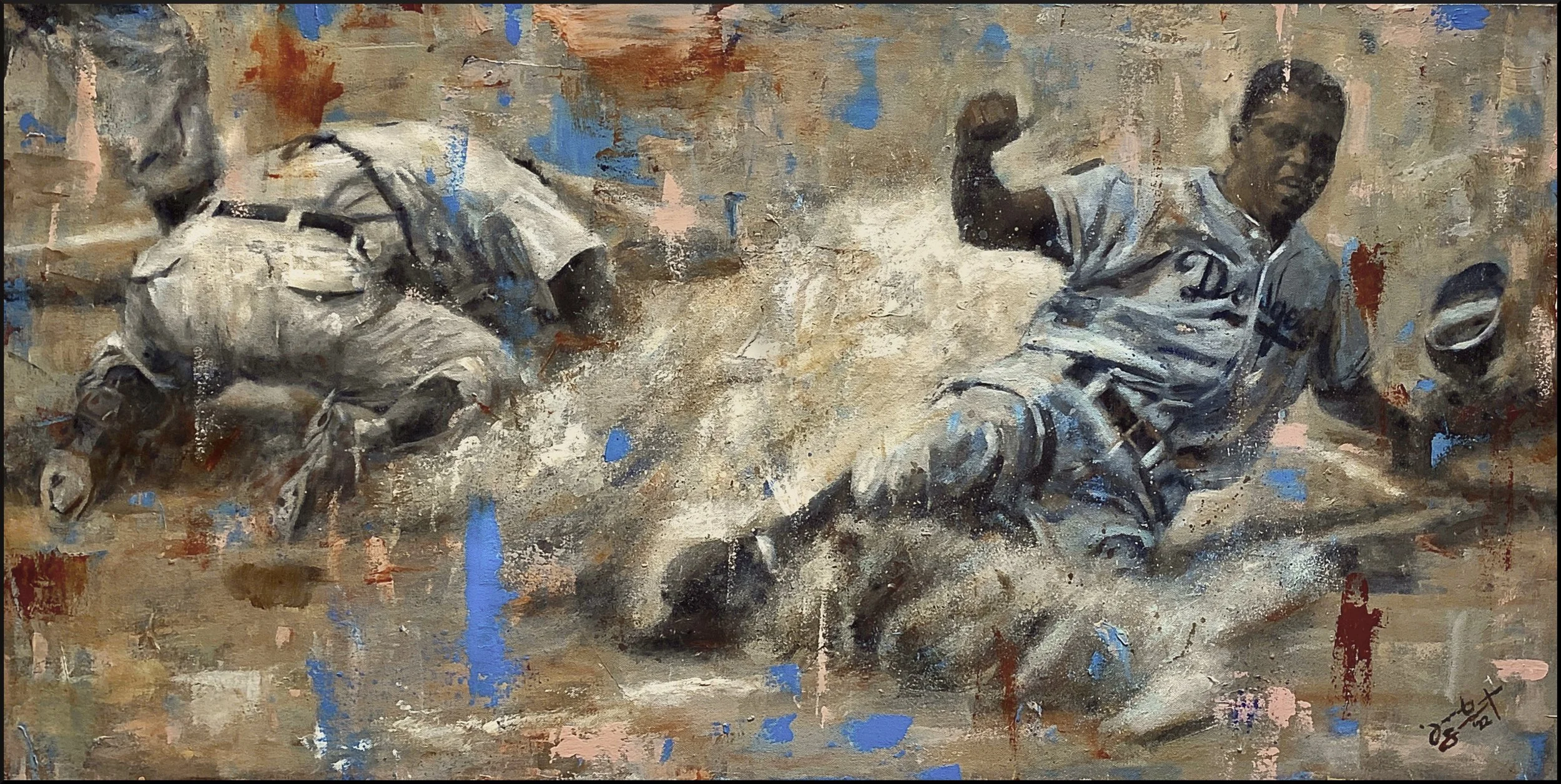
Unequaled
24 × 48 in. · acrylic on heavyweight gallery-wrapped canvas
THE LEGACY
The number became universal.
After his playing career ended following the 1956 season, Robinson’s influence continued far beyond baseball. He remained an outspoken advocate for civil rights and greater opportunity, using the prominence baseball had given him to continue challenging inequality beyond the game.
In 1962, Robinson was elected to the National Baseball Hall of Fame. Thirty-five years later, Major League Baseball retired his number 42 across every team—the first uniform number in the sport to receive that distinction.
Today, players and on-field personnel across Major League Baseball wear 42 each April 15 in his honor. What began with one player walking onto Ebbets Field has become one of baseball’s most enduring symbols of courage, change and possibility.
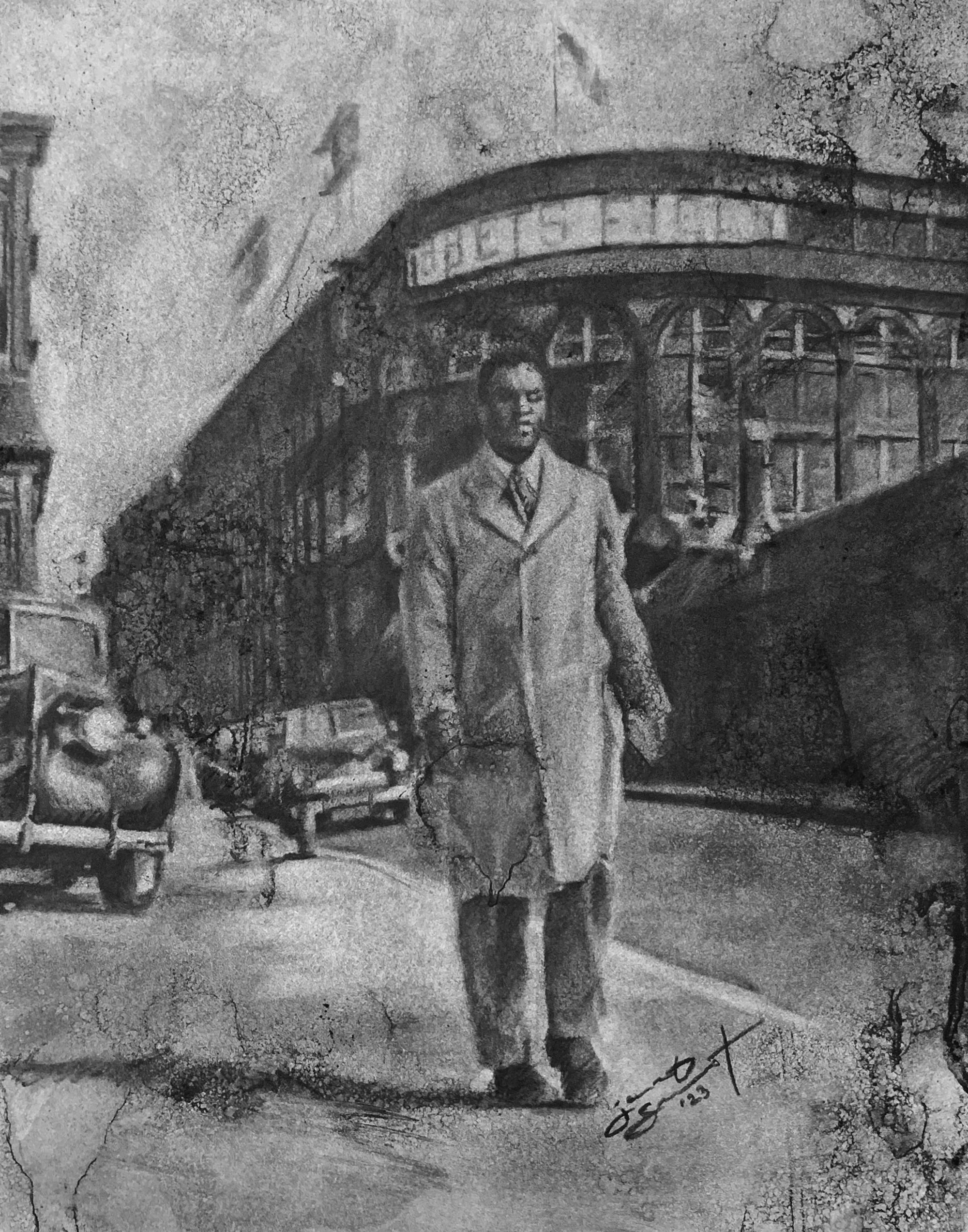
Resilience
14 × 11 in. · charcoal on paper
THE PAINTINGS
Two works. One enduring story.
Unequaled and Resilience approach Jackie Robinson from different directions. Unequaled captures the force and athleticism of the player—the speed, movement and competitive brilliance that made him one of baseball’s greats. Resilience is quieter and more introspective, shifting the focus from what Robinson accomplished on the field to what it required of the man.
One celebrates the player. The other considers the weight he carried.
Together, the works reflect a legacy defined not by a single moment, but by both achievement and endurance.