THE STORY
Before the legend, there was a pitcher.
George Herman “Babe” Ruth · 1895-1948
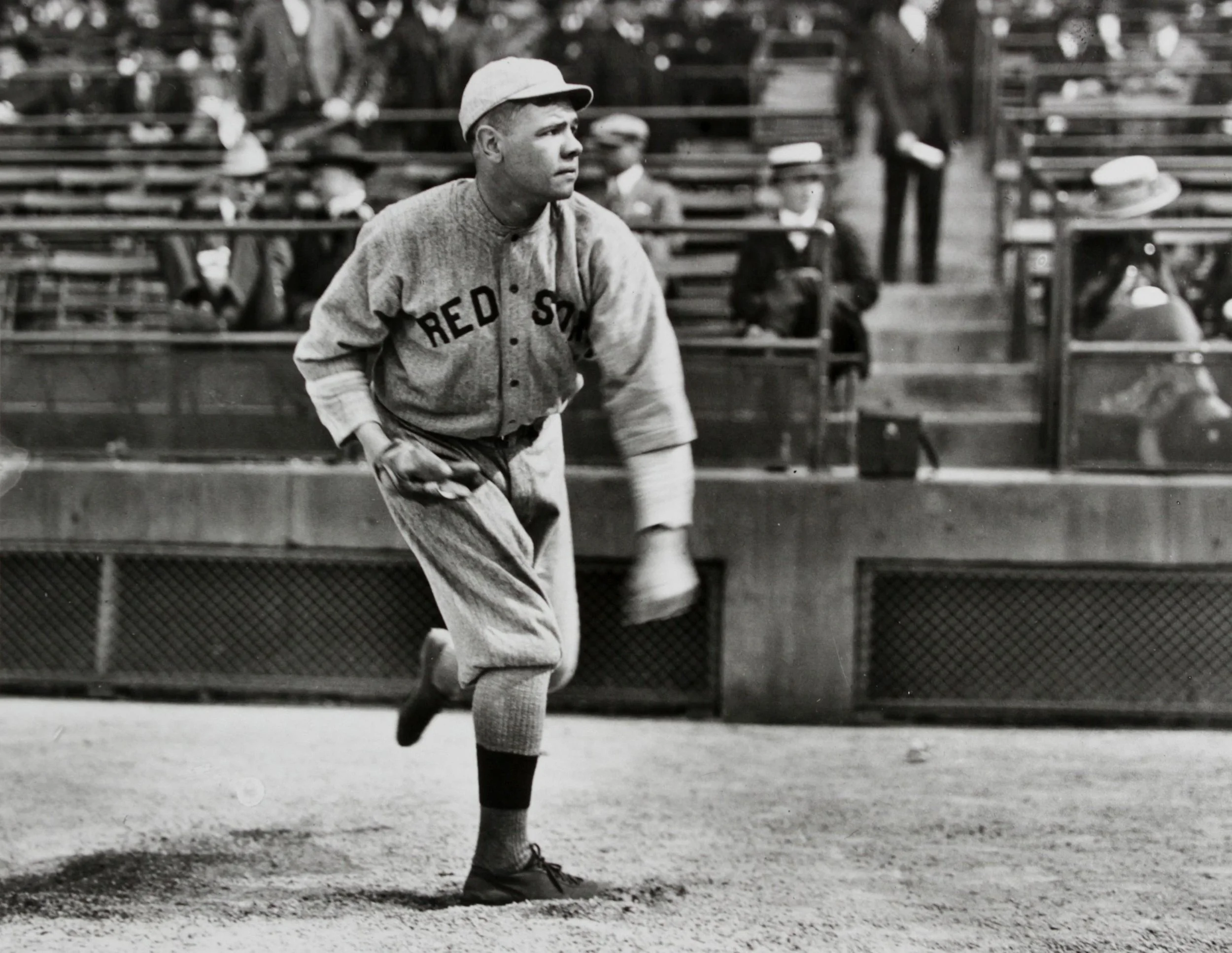
Long before Babe Ruth became the face of the New York Yankees, he was one of baseball’s most formidable young pitchers.
He arrived in the major leagues in 1914 and quickly established himself from the mound with the Boston Red Sox. But the same extraordinary power that made Ruth unusual as a pitcher would eventually pull him away from the mound—and transform both his career and the game around him.
The pitcher would become a hitter.
The hitter would become an icon.
And Babe Ruth would become something larger still: a legend.
THE BEGINNING
Baseball offered a way forward.
George Herman Ruth Jr. spent much of his childhood at St. Mary’s Industrial School for Boys in Baltimore, where baseball became an important part of his life. There, Brother Matthias Boutlier recognized his unusual athletic ability and helped develop the skills that would eventually attract professional attention.
In 1914, Baltimore Orioles owner Jack Dunn signed the 19-year-old Ruth to his first professional contract. His youth—and his close association with Dunn—are generally associated with the nickname that would follow him for the rest of his life: “Babe.”
Ruth’s stay in Baltimore would be brief. Within months, financial pressure forced Dunn to sell several players, and Ruth’s contract was purchased by the Boston Red Sox.
Boston would reveal just how unusual a player they had acquired.
BOSTON
Before the home runs, he dominated from the mound.
Ruth’s first major-league opportunity came with the Boston Red Sox in 1914, but it was over the next several seasons that he established himself as one of the game’s leading pitchers.
In 1916, Ruth went 23–12 with a 1.75 ERA and led the American League with nine shutouts. A year later, he won 24 games. And in the 1916 World Series, he pitched 14 innings in Game 2 to earn a complete-game victory for Boston.
By the end of 1917, Ruth was already an exceptional major-league player.
But the most consequential part of his game was beginning to emerge somewhere else.

THE TRANSFORMATION
The pitcher was becoming something else.
By 1918, Ruth’s power at the plate had become impossible to ignore. Boston began using him increasingly in the outfield and at first base so his bat could remain in the lineup on days he wasn’t pitching.
The change was dramatic. In 1918, Ruth tied for the major-league lead with 11 home runs. A year later, he hit 29—setting a new single-season major-league record.
Ruth had entered professional baseball as a pitcher. By the end of 1919, it was becoming clear that his greatest influence on the game would come with a bat in his hands.
The transformation that would define Babe Ruth had begun.
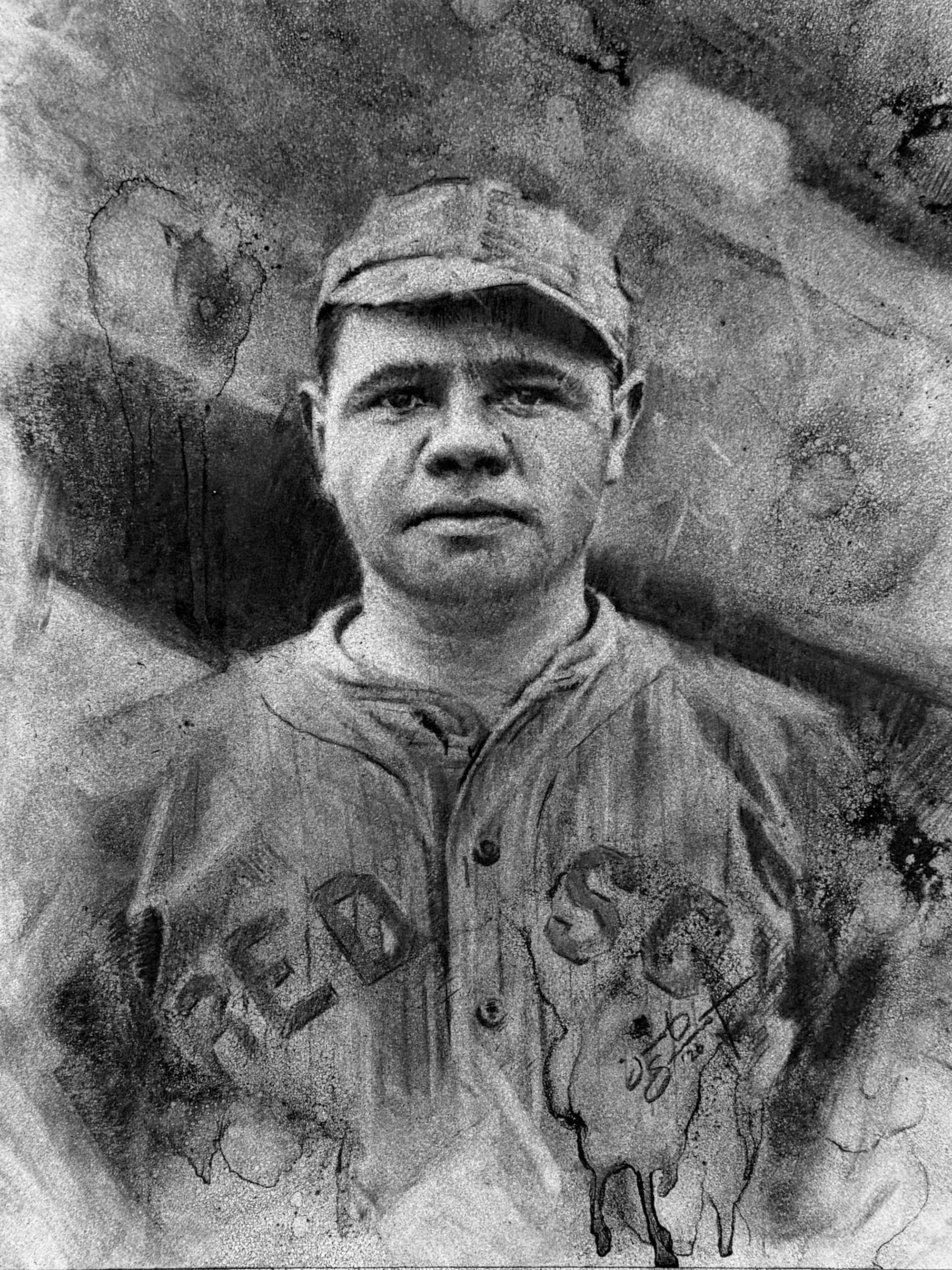
Prologue
14 × 11 in. · charcoal on paper
NEW YORK
The deal changed two franchises.
On December 26, 1919, Red Sox owner Harry Frazee agreed to sell Babe Ruth’s contract to the New York Yankees. The deal was announced publicly in early January 1920, bringing Ruth’s six seasons in Boston to an end.
What followed transformed both Ruth and the Yankees. In his first season in New York, Ruth hit 54 home runs—nearly doubling the major-league record of 29 he had set just one year earlier. He drew enormous crowds and helped turn a team that had never won an American League pennant into one of baseball’s defining franchises.
The scale of Ruth’s power was unlike anything the game had seen.
The pitcher from Baltimore and Boston was disappearing. The Babe was taking his place.
THE PHENOMENON
Baseball had never seen anything quite like him.
Ruth followed his 54-home-run season by hitting 59 in 1921, setting another record. That year, the Yankees reached the World Series for the first time in franchise history.
His home runs were only part of the phenomenon. Ruth became one of the most recognizable figures in America, drawing enormous crowds at home and on the road. His combination of power, personality and celebrity pushed him beyond the boundaries of the sport.
In 1923, the Yankees opened Yankee Stadium and won their first World Series championship. Ruth hit .368 during the Series and homered three times.
By then, Babe Ruth was no longer simply baseball’s greatest attraction.
He had become the figure an era of baseball would be remembered by.
THE PEAK
Sixty home runs changed the measure of greatness.
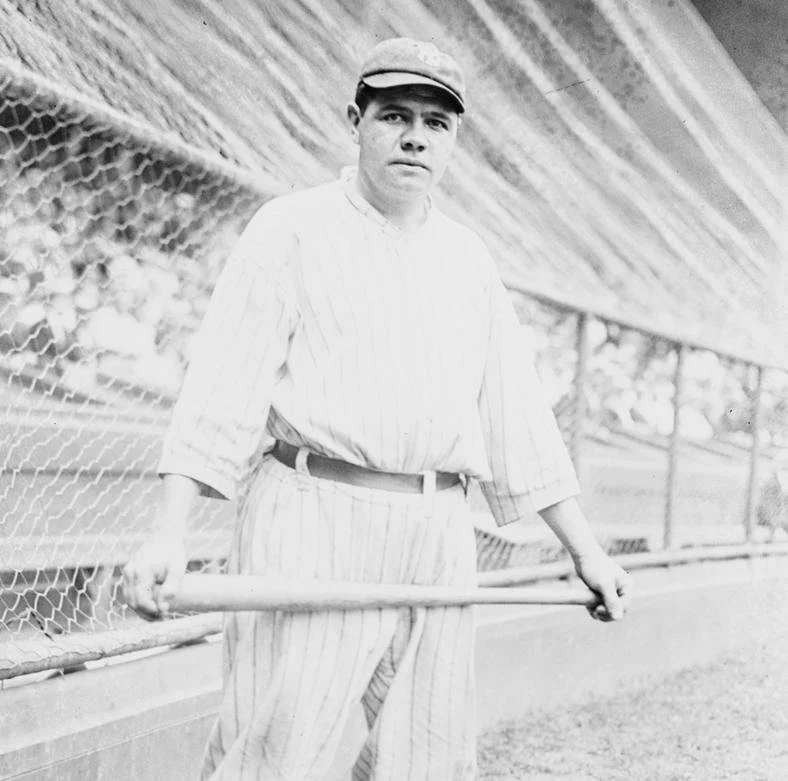
By 1927, Ruth had already rewritten baseball’s home-run records several times. Then he pushed the number further still.
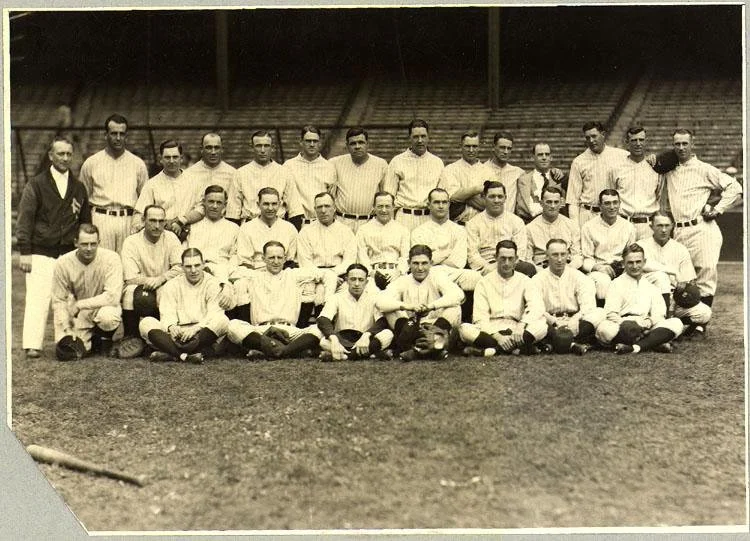
That season, he hit 60 home runs, establishing a major-league record that would stand for 34 years. He also drove in 165 runs and anchored a Yankees lineup so formidable that the team became known as “Murderers’ Row.”
The Yankees won 110 games, swept the Pittsburgh Pirates in the World Series and completed one of the most celebrated seasons in baseball history.
Ruth was now surrounded by stars, including Lou Gehrig, but his presence remained singular. The young pitcher who had arrived in Boston little more than a decade earlier had become the most recognizable player in the game.
The legend was no longer being created. It had arrived.
THE ICON
By the late 1920s, Ruth’s fame extended far beyond the ballpark. Newspapers followed his exploits on and off the field, children imitated his swing, and his larger-than-life personality made him one of the most recognizable celebrities in America.
He was imperfect, unpredictable and endlessly fascinating to the public. The same excess that sometimes created controversy also became part of the mythology surrounding him.
Yet beneath the celebrity remained an extraordinary ballplayer. Ruth finished his career with 714 home runs, a record that stood for nearly four decades. He won seven World Series championships—three with Boston and four with New York—and retired with numbers that permanently altered baseball’s record book.
But statistics alone do not explain why Babe Ruth endured.
Somewhere along the way, the ballplayer became a symbol.
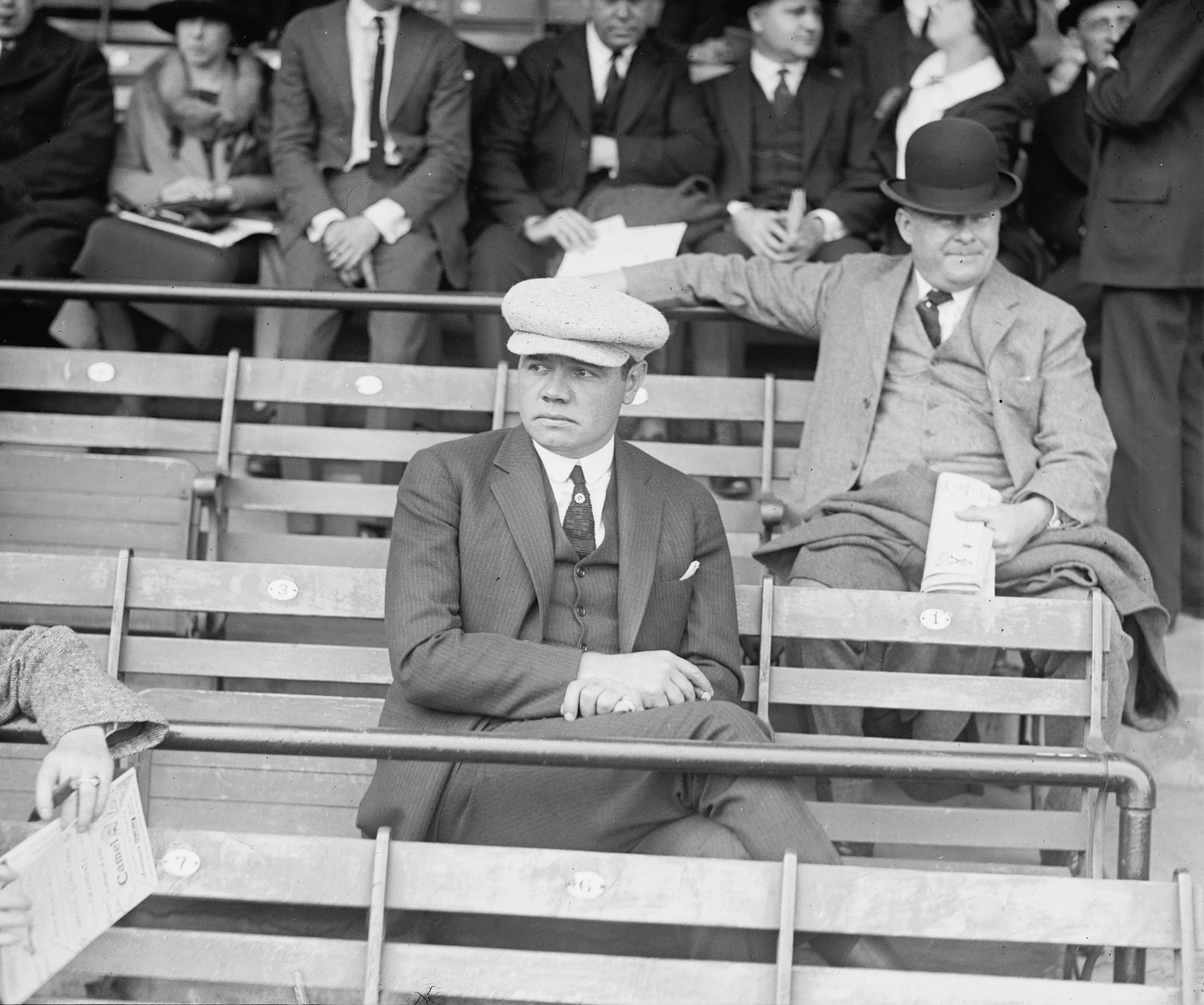
THE LEGACY
The records fell. The name remained.
Ruth played his final major-league season in 1935. The following year, he became one of the first five players elected to the National Baseball Hall of Fame.
Over time, many of the records that once seemed unreachable were surpassed. Roger Maris broke Ruth’s single-season home-run record in 1961. Hank Aaron passed his career total of 714 in 1974.
But Ruth’s place in baseball never depended entirely on records.
He remained the figure against whom generations of power hitters were measured—the former pitcher whose swing, personality and presence became inseparable from the story of the game itself.
When Ruth died in 1948 at the age of 53, tens of thousands of people came to Yankee Stadium to pay their respects.
The records belonged to baseball history. Babe Ruth had become something more enduring.
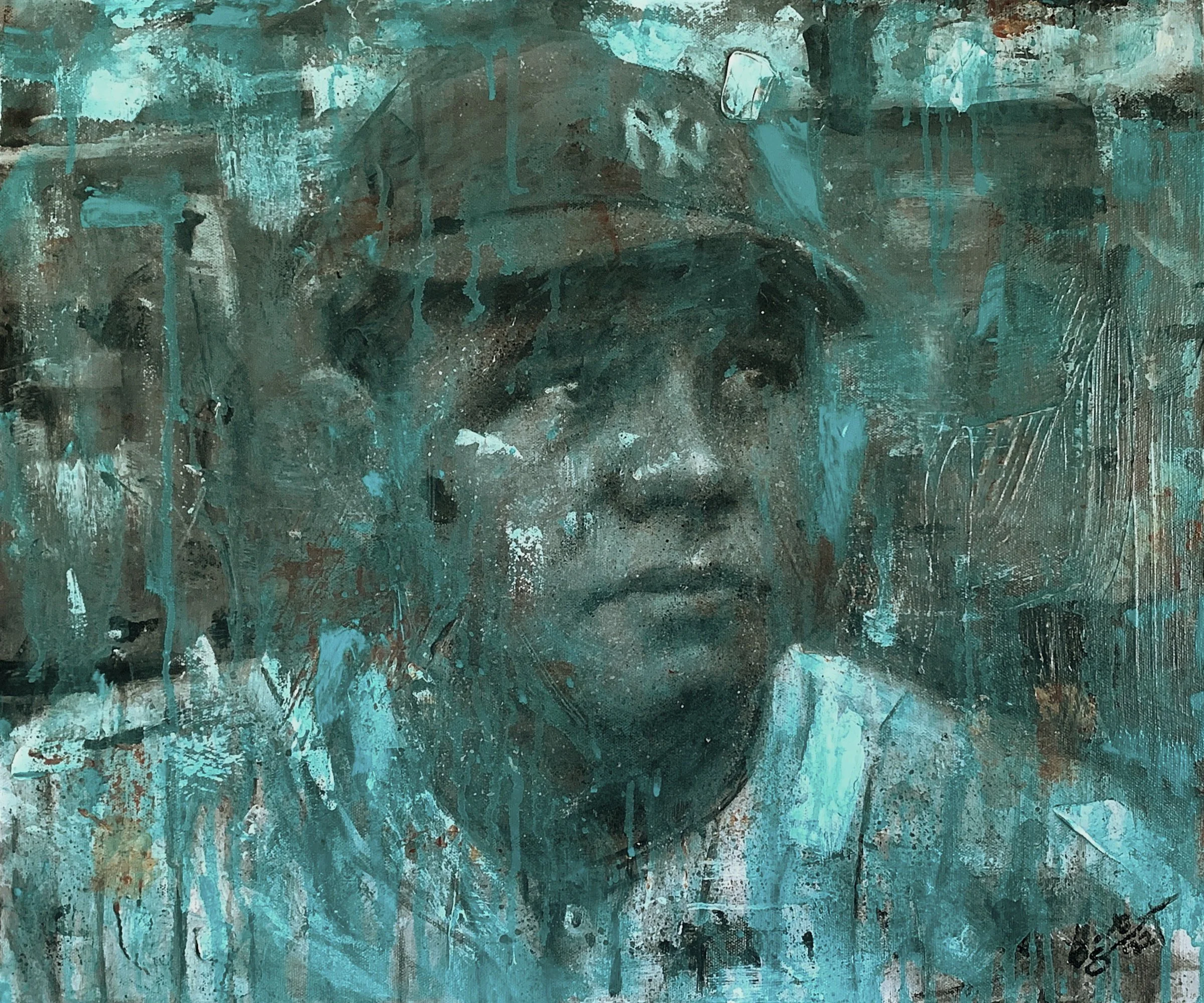
Immortal
20 × 24 in. · acrylic on heavyweight gallery-wrapped canvas
THE PAINTINGS
Before the legend. After he became immortal.
Prologue and Immortal approach Babe Ruth from opposite sides of the transformation that defined his life and career.
Prologue looks back to Boston, when Ruth was still known primarily as a pitcher and the figure he would become was only beginning to emerge. Immortal considers the Ruth who remained—the larger-than-life presence whose image became inseparable from baseball itself.
Together, the two works consider the distance between a young ballplayer at the beginning of his story and the legend history remembers.